I was standing in a kitchen that smelled like burnt toast and regret when a friend dared me to make something that would turn my culinary flop into a crowd‑pleaser. I had just finished a week of bland chicken, the kind that makes you question your life choices, and the only thing on my mind was how to salvage that blandness into something that could spark a conversation. The challenge was simple: take the ordinary chicken breast, pair it with something sweet, throw in a kick of heat, and let the sauce do the heavy lifting. The moment I saw the peaches glinting in the light, I knew I’d found the perfect partner for that fiery jalapeño.
Picture this: a pan sizzling with olive oil, the golden sheen of chicken searing, the sharp scent of jalapeño slicing into the air, and the sweet perfume of peaches caramelizing. The sound of the sizzle is a drumbeat of anticipation, the sight of the sauce thickening into a glossy glaze feels like velvet draped over the meat, and the first bite is a burst of heat followed by a mellow sweetness that lingers on the palate. I could almost taste the way the honey coats the peaches, how the acidity of apple cider vinegar cuts through the richness, and how the cornstarch thickens the sauce into a silky coating that clings to every inch of the chicken. Every sense is in sync, creating a symphony of flavors that makes even the most skeptical diner reach for seconds.
What sets this version apart is that it’s not just another “chicken and fruit” mash‑up; it’s a deliberate dance of textures and temperatures. The chicken is seared to a caramelized crust that locks in juices, then finished in a glaze that gives it a glossy, almost lacquered finish. The peaches are sliced thin so they melt into the sauce, releasing their natural sugars, while the jalapeños provide a heat that stays bright without overpowering. The sauce’s honey base offers a subtle sweetness that balances the acidity, and the cornstarch gives it that satisfying, silky thickness that coats the chicken like a second skin. This is hands down the best version you’ll ever make at home because every element is thoughtfully layered.
And there’s a twist you won’t expect: the final flourish isn’t a dash of lime or a sprinkle of cilantro—it's a splash of apple cider vinegar that cuts through the sweetness and keeps the sauce from becoming cloying. Imagine the way that vinegar brightens the peach, turning the sauce from sweet to savory in an instant. That little secret will make your taste buds do a double take, and I dare you to taste this and not go back for seconds. Let me walk you through every single step—by the end, you’ll wonder how you ever made it any other way.
What Makes This Version Stand Out
- Flavor Fusion: The combination of sweet peaches, spicy jalapeños, and honey creates a balanced palette that feels both adventurous and comforting. The acidity from apple cider vinegar cuts through the richness, leaving a clean finish.
- Texture Contrast: The chicken’s seared crust contrasts with the silky glaze, while the peaches soften into a velvety sauce that clings to every bite.
- Simplicity: With only nine ingredients and a single pan, this dish is perfect for a weekday dinner or a quick weekend treat.
- Make‑Ahead Friendly: The sauce can be pre‑made and reheated, making it ideal for meal prep or entertaining on short notice.
- Ingredient Quality: Fresh peaches and jalapeños bring brightness, while a good olive oil adds depth and a hint of fruitiness.
- Visual Appeal: The glossy finish and pop of color from the peaches and jalapeños make the dish Instagram‑worthy.
- Audience Reaction: Friends and family rave about the unexpected heat and sweet finish; it’s a conversation starter at any dinner table.
Inside the Ingredient List
The Flavor Base
The honey and apple cider vinegar form the core of the sauce, providing sweetness and acidity that keep the dish from tipping into one dimension. Honey’s natural sugars caramelize as they heat, creating a glossy glaze that clings to the chicken. If you skip the vinegar, the sauce will become cloyingly sweet, and the heat from the jalapeños will feel flat. For a lower‑sugar option, try using a sugar‑free honey substitute, but keep the vinegar to maintain balance.
The Texture Crew
Cornstarch is the unsung hero that thickens the glaze without adding weight. It’s mixed with water to create a slurry that, when added to the simmering sauce, instantly thickens it to a silky consistency. Skipping cornstarch will leave the sauce too runny, making it difficult to coat the chicken evenly. If you’re gluten‑free, cornstarch is already a safe choice, but you can also use arrowroot for a slightly different mouthfeel.
The Unexpected Star
Peaches aren’t just sweet—they bring a subtle tartness that complements the honey and cuts through the heat. Fresh, ripe peaches are ideal; they release juices that help build the sauce. If peaches are out of season, you can use canned peach slices in light syrup, but drain them well to avoid excess liquid. The key is to slice them thin so they soften quickly and blend seamlessly into the glaze.
The Final Flourish
The jalapeños add a punch that’s both bright and lingering. They’re diced finely to distribute heat evenly across the chicken. If you prefer a milder kick, remove the seeds before dicing. For a smoky twist, toast the jalapeño pieces in a dry pan before adding them to the sauce. This step adds a layer of depth that elevates the dish beyond a simple sweet‑heat combo.
Everything's prepped? Good. Let's get into the real action…
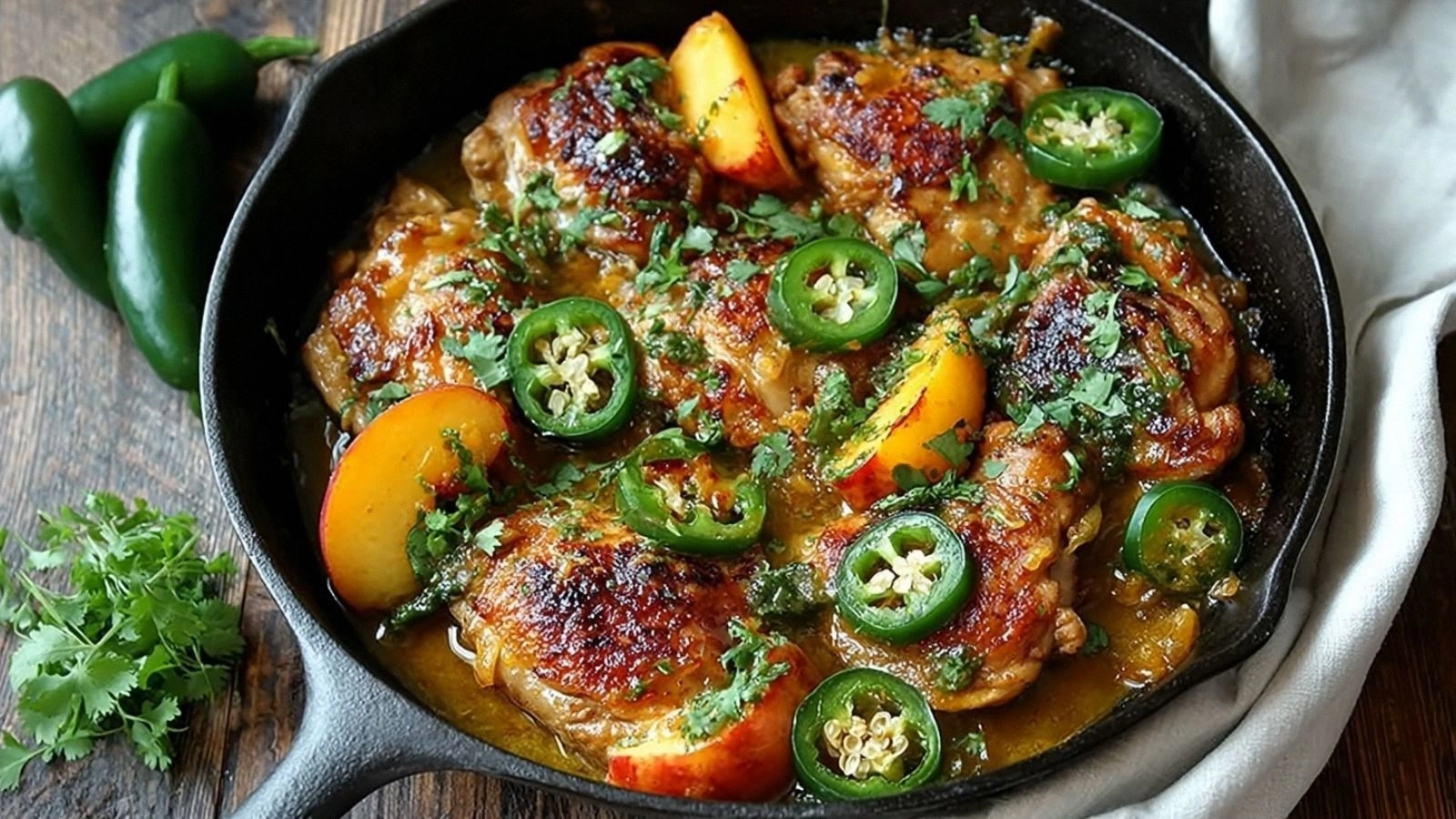
The Method — Step by Step
- First, season the chicken breasts generously with salt and pepper on both sides. Heat 2 tablespoons of olive oil in a large skillet over medium‑high heat until shimmering. Place the chicken in the pan and sear for 4–5 minutes on each side until a deep golden crust forms. This creates a caramelized exterior that locks in juices. When you hear that satisfying sizzle, you know the pan is ready.
- Remove the chicken and set it aside on a plate. In the same skillet, add the diced jalapeños and cook for 1 minute, letting them release their aroma. This quick sauté brings out the heat without burning the peppers. Keep an eye on them; you want a bright, not bitter, flavor.
- Add the sliced peaches to the skillet, stirring to coat them in the jalapeño‑oil mixture. Cook for 2 minutes, just enough for the peaches to soften slightly. The peaches will start to release juices, forming a natural base for the glaze. The color shift from green to golden is a visual cue that the peaches are doing their job.
- Stir in 1/4 cup of honey and 2 tablespoons of apple cider vinegar. Bring the mixture to a gentle simmer, letting the flavors meld for 2–3 minutes. The honey should start to thicken, coating the peaches and jalapeños in a glossy sheen. Watch for the first signs of caramelization; that’s the sweet moment.
- Whisk 1 tablespoon of cornstarch with 1/4 cup of water until smooth, creating a slurry. Pour this into the skillet, stirring constantly. The sauce will thicken almost immediately, turning silky and glossy. If it’s too thick, add a splash more water; if too thin, let it simmer a bit longer.
- Return the seared chicken breasts to the pan, spooning the sauce over them. Reduce the heat to medium and let everything cook together for 4–5 minutes, allowing the chicken to absorb the glaze. The sauce should coat the chicken like a lacquered finish. Flip once, ensuring the glaze adheres to both sides.
- Once the chicken is cooked through (internal temperature 165°F), remove the skillet from the heat. Let the chicken rest for 3 minutes; this allows the juices to redistribute, keeping the meat moist. While resting, the sauce will thicken slightly, creating a perfect coating.
- Serve the chicken on a plate, spooning any remaining sauce over the top. Garnish with a sprinkle of fresh herbs or a squeeze of lemon if you like a bright finish. The dish looks as good as it tastes, with a glossy, caramelized surface that invites a forkful.
- Enjoy immediately, or pair with a crisp salad or roasted vegetables to balance the richness. The dish is versatile enough to be plated with rice or quinoa for a complete meal. Remember, the key to this recipe is the balance of sweet, spicy, and savory—keep it in check, and you’ll have a crowd‑pleaser.
That’s it—you did it. But hold on, I’ve got a few more tricks that will take this to another level…
Insider Tricks for Flawless Results
The Temperature Rule Nobody Follows
Many cooks start the sauce on high heat, but that can cause the honey to burn before the peaches soften. Keep the simmer low to medium to allow the flavors to meld gently. I once tried a high‑heat approach and ended up with a burnt glaze that tasted like charcoal. The trick is patience—let the sauce develop slowly, and you’ll get a silky finish.
Why Your Nose Knows Best
Smell is your first line of defense against overcooking. If the sauce starts to smell like burnt sugar, it’s time to lower the heat or remove the pan from the stove. A fresh, sweet scent indicates the peaches are caramelizing properly. Trust your nose; it’s a reliable guide.
The 5‑Minute Rest That Changes Everything
Resting the chicken after cooking allows the juices to redistribute, keeping the meat moist and tender. Skipping the rest often results in a dry bite. I’ve seen people slice the chicken immediately, only to find the center dry. A brief 5‑minute pause is all you need for a juicy finish.
The Quick Slice Trick
When slicing the peaches, cut them thinly and evenly. Uneven slices will melt at different rates, creating a mushy sauce in some spots. Use a mandoline for uniform thickness; it saves time and ensures consistency.
The Garnish Game
A simple sprinkle of fresh herbs or a squeeze of lemon can elevate the dish instantly. The bright acidity cuts through the richness, while herbs add a fresh note. I love using fresh cilantro or a pinch of parsley—both add a pop of color and flavor.
Creative Twists and Variations
Spicy Pineapple Chicken
Swap peaches for fresh pineapple chunks for a tropical twist. The natural acidity of pineapple complements the honey, while the jalapeños keep the heat. This version is perfect for summer gatherings and pairs wonderfully with coconut rice.
Maple‑Glazed Chicken
Replace honey with pure maple syrup for a richer, caramel flavor. The syrup adds depth and pairs well with roasted sweet potatoes. The jalapeños keep the dish balanced, preventing the maple from becoming overpowering.
Herb‑Infused Variation
Add a handful of fresh rosemary or thyme while searing the chicken. The herbs infuse the meat with earthy notes that complement the sweet glaze. This version works well with a side of mashed potatoes.
Gluten‑Free Version
Use a gluten‑free cornstarch or arrowroot powder for the slurry. The sauce will thicken just as well without gluten. This tweak makes the dish safe for those with celiac disease or gluten sensitivity.
Vegan Take‑Away
Replace the chicken with thick slices of marinated tofu or tempeh. The tofu absorbs the glaze, creating a satisfying texture. This version is perfect for a plant‑based dinner that still feels indulgent.
Storing and Bringing It Back to Life
Fridge Storage
Cool the dish completely before transferring it to an airtight container. Store in the refrigerator for up to 3 days. The sauce may thicken slightly; reheat gently on low heat, stirring until it reaches the desired consistency.
Freezer Friendly
Wrap the chicken tightly in foil or plastic wrap, then place in a freezer bag. Freeze for up to 2 months. Thaw overnight in the refrigerator before reheating. A splash of water or broth helps restore moisture.
Best Reheating Method
Reheat in a skillet over medium heat, adding a splash of water or broth to loosen the glaze. Stir frequently to prevent sticking. The sauce should regain its glossy sheen, and the chicken will be juicy and flavorful.