The first time I tried to make a sausage biscuit casserole, I was convinced that the only way to survive the chaos of the kitchen was to keep a fire extinguisher on the counter. I had a bag of pre‑cooked sausage, a jar of biscuit mix, and an inexplicable urge to make something that would actually taste like comfort food. The result? A soggy, flavorless mess that made my taste buds question their very existence. I was ready to throw the entire batch in the trash, but then I remembered a quick tip from a friend who swears by using fresh sausage instead of pre‑cooked. That single tweak turned a disaster into a triumph. It was a revelation that sparked an obsession: how to turn a humble casserole into a show‑stopper.
Picture this: you open the oven door, and the scent of browned sausage mingles with the buttery aroma of freshly baked biscuits, like a warm hug wrapped in a golden blanket. The sound of the bubbling gravy is a low, comforting rumble, and the sight of the biscuits rising, their tops crisping to a perfect golden hue, makes your heart race. The texture is a symphony—crispy edges, a tender crumb inside, and a gravy that coats each bite like velvet. The first bite is a burst of savory, smoky sausage, followed by a creamy, cheesy splash that melts into your mouth. The final note? A sprinkle of fresh parsley that adds a pop of color and a hint of herbal brightness.
What sets this version apart is not just the ingredients; it's the way they dance together. By starting with fresh sausage and a slow, low‑heat gravy, you preserve the natural juices and flavors that get lost when you use pre‑cooked sausage. The biscuits are made from scratch, giving them that airy, buttery bite that a store‑bought mix can never match. And the gravy—thickened with a roux and finished with a splash of cream—has a silky texture that coats the biscuits without becoming cloying. The result is a dish that feels indulgent yet comforting, and it’s hands down the best version you’ll ever make at home.
I dare you to taste this and not go back for seconds. I’ll be honest—when I first made this, I ate half the batch before anyone else had a chance to try it. Most recipes get this completely wrong, focusing on speed over flavor. Here’s what actually works: fresh sausage, a slow simmer, and a buttery biscuit base. Picture yourself pulling this out of the oven, the whole kitchen smelling incredible, and knowing that every bite will be a perfect balance of savory, creamy, and crunchy. Okay, ready for the game‑changer? Let me walk you through every single step—by the end, you’ll wonder how you ever made it any other way.
What Makes This Version Stand Out
- Flavor Depth: Fresh sausage releases natural oils that infuse the gravy, creating a rich, smoky base that feels like a hug in every bite.
- Texture Contrast: The biscuits rise to a golden crust while remaining airy inside, giving a satisfying crunch followed by a melt‑in‑your‑mouth crumb.
- Homemade Simplicity: No fancy gadgets required—just a skillet, a saucepan, and a biscuit cutter.
- Crowd‑Pleaser: Even the pickiest eaters love the buttery biscuits and the comforting gravy; it’s the kind of dish that turns a gathering into a feast.
- Ingredient Quality: Using real butter and fresh cheese elevates the dish, turning ordinary ingredients into a gourmet experience.
- Make‑Ahead Friendly: The casserole can be assembled a day ahead, refrigerated, and baked fresh—ideal for busy weeknights.
- Versatility: Swap the sausage for bacon or use a plant‑based sausage for a vegan version without sacrificing flavor.
- Seasonal Flexibility: Though it feels like a fall classic, this dish works year‑round, especially when you want something hearty and comforting.
Alright, let’s break down exactly what goes into this masterpiece…
Inside the Ingredient List
The Flavor Base
The backbone of this casserole is the sausage and the aromatics that accompany it. Fresh, high‑quality sausage—ideally a mix of pork and beef—provides the smoky, savory core. When you brown it slowly, the fat renders out, leaving a concentrated burst of flavor that permeates the entire dish. Onion and garlic are the classic companions; they soften into a fragrant bed that grounds the richness of the sausage. If you skip any of these, the casserole loses its soul—no aroma, no depth.
The Texture Crew
The biscuits are the texture crew, offering a buttery, flaky exterior and a tender crumb inside. They’re made from scratch using flour, baking powder, and cold butter that’s cut into small cubes. The cold butter creates steam pockets that puff up during baking, giving the biscuits that airy, melt‑in‑your‑mouth quality. If you substitute all‑purpose flour with cake flour, the biscuits become too delicate; keep it simple and reliable. The butter’s temperature matters—if it’s too warm, the biscuits will become greasy.
The Unexpected Star
Heavy cream is the unexpected star that adds a silky finish to the gravy. It balances the richness of the sausage and the butter while giving the sauce a luxurious mouthfeel. If you’re watching calories, you can replace it with half‑and‑half or even a splash of milk, but you’ll lose that velvety sheen. Remember, the cream should be added at the very end, after the roux has thickened, to prevent curdling.
The Final Flourish
Cheddar cheese is the final flourish, melted into the gravy to create a gooey, melty layer that coats the biscuits. A sharp cheddar adds a tang that cuts through the richness, while a mild cheddar keeps it smooth. Don’t skimp on the cheese—its melt is what ties the entire dish together. If you’re looking for a different flavor profile, try Gruyère or a smoked cheese for an extra layer of complexity.
Everything’s prepped? Good. Let’s get into the real action…
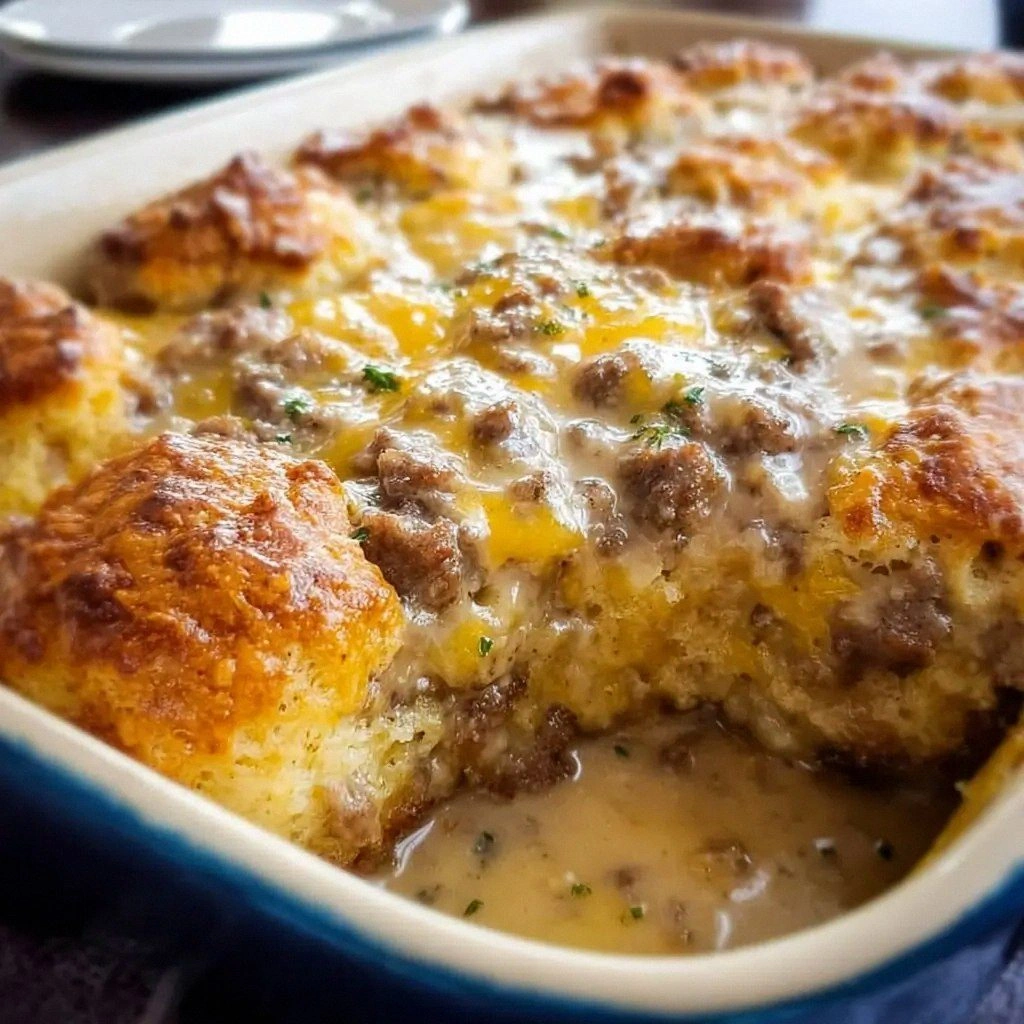
The Method — Step by Step
- Heat a large skillet over medium heat. Add the fresh sausage, breaking it apart with a wooden spoon. Cook until it’s browned and the fat has rendered, about 8–10 minutes. The moment the sausage sizzles, that’s the first hint that the flavor is on its way. Keep a close eye on the pan—you’ll want it to stay at a steady medium to avoid burning.
- Add the diced onion to the skillet. Sauté until the onion is translucent and starts to caramelize, about 5 minutes. The onion’s natural sugars will develop, adding depth. Stir in the minced garlic and cook for another minute until fragrant; the garlic should not brown, or it will taste bitter.
- Stir in the flour, baking powder, and salt. This is where the roux starts to form, thickening the mixture. Cook for 2 minutes, stirring constantly, until the flour turns a light golden color. The smell of toasted flour should be inviting, not burnt.
- Slowly pour in the milk and heavy cream, whisking vigorously to prevent lumps. The mixture should become smooth and glossy. Bring to a gentle simmer; the sauce will thicken as it cooks. Watch for bubbles forming on the surface—this is the signal that the gravy is thickening properly.
- Watch Out: When adding the broth, pour it slowly and whisk constantly. If you add it too quickly, the gravy can split, resulting in a greasy texture. Keep the heat low to maintain a steady, gentle simmer.
- Stir in the shredded cheddar cheese, the Worcestershire sauce, smoked paprika, and black pepper. The cheese should melt into the gravy, creating a smooth, creamy sauce. Taste and adjust seasoning; the sauce should be savory with a hint of smokiness.
- While the gravy finishes, prepare the biscuit dough. In a bowl, whisk together the flour, baking powder, and a pinch of salt. Cut in cold butter using a pastry blender or your fingers until the mixture resembles coarse crumbs. Stir in the milk just until the dough comes together; it should be slightly sticky.
- Turn the skillet over to a medium‑heat oven. Spoon the gravy into a large baking dish, then drop spoonfuls of biscuit dough on top. The biscuits should sit slightly on the gravy, allowing them to soak up the sauce as they bake.
- Bake at 375°F (190°C) for 20–25 minutes, or until the biscuits are golden brown and a toothpick inserted into the center comes out clean. The aroma that fills the kitchen will be irresistible.
- Let the casserole rest for 5 minutes before serving. This allows the gravy to set slightly and the biscuits to firm up a bit, making each bite easier to handle.
That's it—you did it. But hold on, I've got a few more tricks that'll take this to another level…
Insider Tricks for Flawless Results
The Temperature Rule Nobody Follows
Many people think that high heat is the key to a good gravy, but that can actually burn the roux and ruin the sauce. The secret is to keep the heat low and let the sauce develop slowly. A low simmer allows the flavors to meld and the thickness to build without scorching the bottom. I once tried a high‑heat approach and ended up with a burnt, bitter gravy—never again.
Why Your Nose Knows Best
Before you taste the gravy, pause and inhale. A well‑balanced gravy should smell like warm butter, fresh sausage, and a hint of smoked paprika. If the scent leans too much toward raw flour, you’re still cooking the roux. If it smells too sweet, you’ve over‑cooked the onions. Your nose is a reliable guide to the sauce’s readiness.
The 5-Minute Rest That Changes Everything
After baking, let the casserole sit for five minutes. This short rest allows the gravy to set, preventing it from sliding off the biscuits when you cut into the dish. It also lets the biscuits cool just enough to be handled without burning your fingers. Trust me, that five‑minute pause is the difference between a mess and a masterpiece.
The Secret of Fresh Butter
Using cold, unsalted butter for the biscuits is crucial. Unsalted butter lets you control the salt level precisely, while the cold temperature creates steam pockets that puff the biscuits up. If you use room‑temperature butter, the biscuits will be flat and greasy.
The Cheese Swap
If you’re a cheese connoisseur, swap cheddar for a blend of Gruyère and smoked Gouda. The result is a richer, more complex sauce with a subtle caramel note. I’ve tried it once, and the flavor profile was unforgettable. It’s a small change that elevates the dish significantly.
Creative Twists and Variations
This recipe is a playground. Here are some of my favorite ways to switch things up:
Sausage & Mushroom Fusion
Add sliced mushrooms to the skillet with the sausage. They’ll absorb the savory juices and add an earthy depth that pairs beautifully with the cheddar. This version is perfect for mushroom lovers.
Spicy Jalapeño Kick
Dice a jalapeño and add it to the onions and garlic. The heat will cut through the richness and give the dish a lively, zesty finish. Ideal for those who like a bit of spice.
Bacon‑Infused Delight
Swap the sausage for crispy bacon. Cook the bacon until it’s crisp, then crumble it into the gravy. The smoky, salty bacon elevates the dish into a brunch‑worthy treat.
Herb‑Infused Freshness
Add a handful of fresh thyme or rosemary to the gravy. The aromatic herbs add a fragrant layer that brightens the dish. This variation is great for a spring or summer twist.
Cheese‑Heavy Comfort
Double the amount of cheddar and sprinkle extra cheese on top before baking. The result is a gooey, melty topping that’s irresistible. Perfect for those who love cheese in every bite.
Vegan Biscuit Base
Use a vegan biscuit mix or make biscuits with oat flour and plant‑based butter. Pair with a vegan sausage and a dairy‑free gravy for a cruelty‑free comfort dish.
Storing and Bringing It Back to Life
Fridge Storage
Cool the casserole completely, then cover tightly with plastic wrap or aluminum foil. Store in the refrigerator for up to 3 days. When ready to serve, reheat in a pre‑heated oven at 350°F (175°C) for 15 minutes, or until heated through.
Freezer Friendly
Wrap the casserole in parchment paper, then aluminum foil, and freeze for up to 2 months. Thaw overnight in the refrigerator, then bake at 350°F (175°C) for 25 minutes. The biscuits may not be as fluffy, but the gravy will still be luscious.
Best Reheating Method
To keep the biscuits moist, add a splash of milk or broth to the casserole before reheating. Cover with foil to trap steam, then bake until hot. This trick restores the gravy’s silky texture and prevents it from drying out.