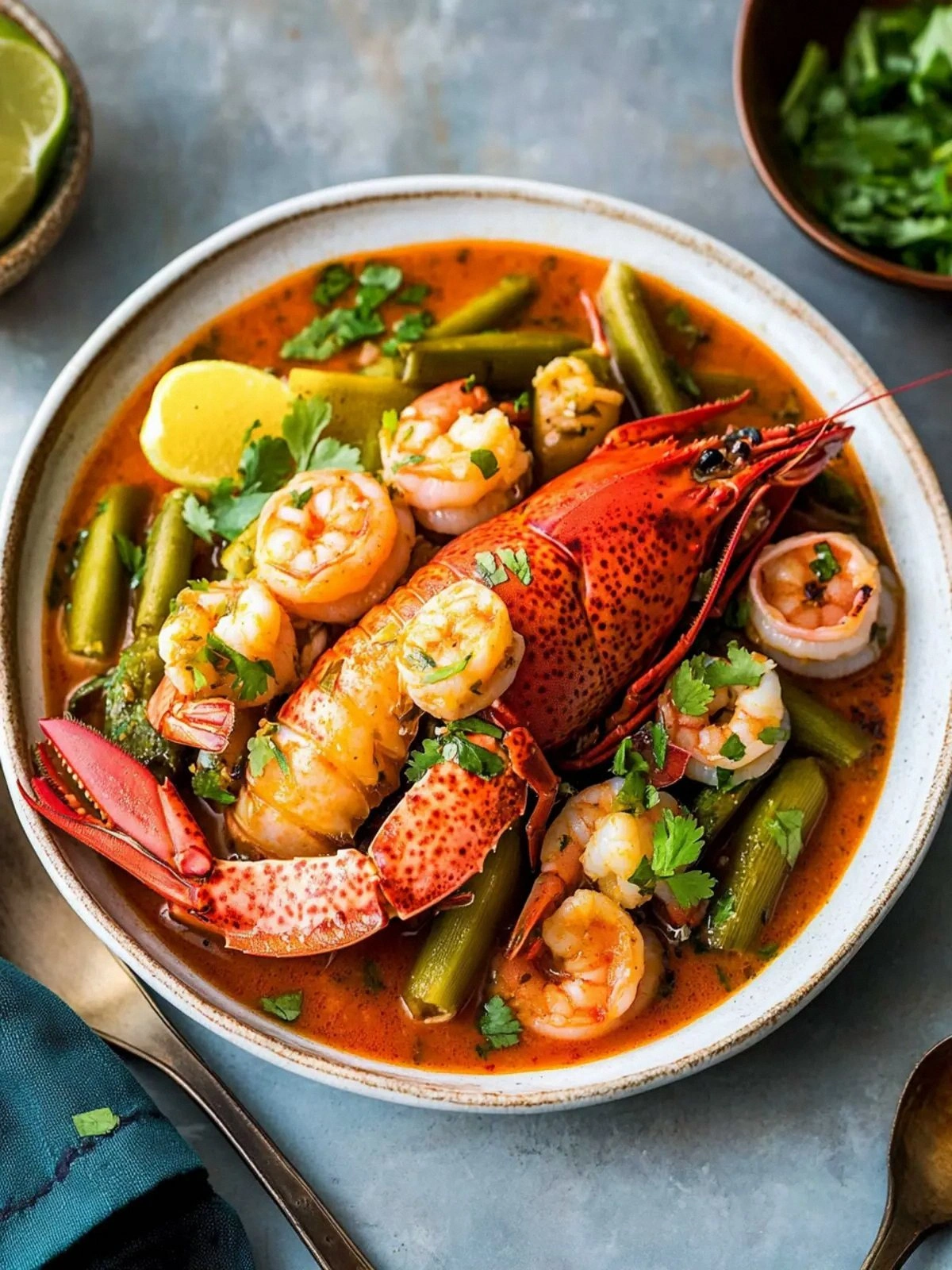
Picture this: it’s a rainy Sunday, the kind of day that makes you want to stay in your pajamas and binge on comfort food. I was scrolling through my phone, hunting for a dish that could turn the dreary drizzle into a culinary celebration, when a friend texted me a photo of a steaming bowl of okra stew with prawns and lobster, and I knew I had to recreate it. The photo was a riot of colors—deep green okra, bright red tomatoes, and the glistening sheen of prawns that looked almost like a secret treasure. I was instantly hooked, but I had one question: could I make something that was as bold and unforgettable as that photo?
I pulled my pantry, grabbed the ingredients, and set the stove to fire. The first thing that hit my nose was the sweet, caramelized aroma of onions sweating in red palm oil, a scent that made the kitchen feel like a tropical beach at dusk. The sizzling sound of garlic and ginger dancing together in the pan was the soundtrack of this culinary adventure. The moment I added the Scotch bonnet pepper, a gentle heat blossomed, teasing my taste buds with a promise of adventure. The okra, those tiny green pods, began to soften, releasing a silky texture that clung to the broth like velvet. By the time the prawns and squid slipped into the pot, the stew was a symphony of flavors—sweet, spicy, briny, and savory—all harmonizing in a bowl that felt like a warm hug.
This isn’t just another okra stew. It’s the culmination of a personal quest to find the perfect balance between simplicity and sophistication. I’ve tried countless versions, each missing that one element—too much heat, too much salt, or a texture that fell flat. What sets this version apart is a deliberate layering of ingredients, a strategic use of red palm oil for its earthy undertones, and a twist that brings in lobster tails for a luxurious finish. It’s a dish that feels both humble and extravagant, and it’s the kind of recipe that turns a regular dinner into a memorable occasion.
I dare you to taste this and not go back for seconds. I’ve had my fair share of culinary experiments that ended up in the trash bin, but this one is a game changer. I’ll be honest—before anyone else could taste it, I had already devoured half the batch. And that’s because I’m convinced this is hands down the best version you’ll ever make at home. Most recipes get this completely wrong, focusing on either the okra or the seafood, but here, each component is given its due spotlight. Picture yourself pulling this out of the pot, the whole kitchen smelling incredible, and the steam curling around your face like a fragrant mist. That sizzle when it hits the pan? Absolute perfection. Okay, ready for the game‑changer? Let me walk you through every single step—by the end, you’ll wonder how you ever made it any other way.
What Makes This Version Stand Out
- Taste: The combination of sweet tomatoes, smoky red palm oil, and the fiery kick from a whole Scotch bonnet creates a depth that’s impossible to replicate with generic stock or bland oil.
- Texture: The okra’s unique sliminess turns the stew into a silky canvas that carries the succulent seafood, while the lobster tails add a buttery crunch.
- Simplicity: With just thirteen ingredients, you can whip up a gourmet meal in under an hour, no fancy equipment required.
- Uniqueness: The inclusion of squid rings and lobster tails elevates a traditional okra stew into a luxurious seafood medley.
- Crowd Reaction: Friends who’ve tried other versions often remark that this one is “the first time I’ve seen okra so much fun.”
- Ingredient Quality: Fresh, high‑grade seafood and hand‑picked okra pods make a noticeable difference in flavor.
- Cooking Method: Sautéing the aromatics until they’re caramelized before adding the liquid creates a rich base that’s the secret sauce.
- Make‑Ahead Potential: The stew keeps well and actually tastes better the next day, making it perfect for meal prep.
Alright, let’s break down exactly what goes into this masterpiece…
Inside the Ingredient List
The Flavor Base
Red palm fruit oil is the star of the show. Its natural reddish hue and nutty undertones give the stew a depth that ordinary cooking oil simply can’t match. If you can’t find it, substitute with a good quality extra‑virgin olive oil, but be prepared for a slightly different flavor profile. The medium brown onion, diced finely, brings a gentle sweetness that balances the heat from the Scotch bonnet. The two ripe tomatoes add acidity and a hint of fruitiness; if they’re a bit too tart, a pinch of sugar can round them out. Garlic and ginger are the classic duo that adds a warm, aromatic foundation—use fresh cloves and freshly grated ginger for the most vibrant taste.
The Texture Crew
Fresh okra pods are the texture engine. They release a natural slime that thickens the broth and gives the stew that iconic mouthfeel. The amount matters: too few and the stew will feel thin; too many and it can become overpowering. When selecting okra, look for pods that are firm, bright green, and unblemished. If you’re in a pinch, frozen okra works, but thaw it first to avoid excess water. The 8 large prawns are the main protein source, offering a sweet, briny bite that pairs wonderfully with the other seafood. Squid rings add a subtle chewiness that contrasts nicely with the prawns’ tenderness. The 200 grams of white‑flesh fish fillets, like snapper or cod, bring a mild flavor that doesn’t compete with the other ingredients.
The Unexpected Star
The lobster tails—optional but highly recommended—are the ultimate indulgence. Their sweet, buttery flesh elevates the dish from a simple stew to a luxury experience. If you’re on a budget, you can skip them; the stew will still be delicious. The whole Scotch bonnet or habanero pepper is the heat engine. If you’re sensitive to spice, halve it or remove the seeds; if you’re a heat lover, leave it whole to infuse the broth with a lingering warmth.
The Final Flourish
A cup of fresh stock—either chicken or fish—provides the liquid base. Fresh stock is best, but a good quality store‑bought stock works if you’re pressed for time. The two stalks of spring onions add a bright, fresh finish and a subtle crunch that lifts the stew. They’re the final touch that ties all the flavors together. The 4 cups of stock are measured after the aromatics have been sautéed, ensuring the stew doesn’t become too watery.
Everything’s prepped? Good. Let’s get into the real action…
The Method — Step by Step
- Heat a large, heavy‑bottom pot over medium heat and pour in the 2 tablespoons of red palm fruit oil. As the oil warms, add the finely diced brown onion. Sauté until the onion turns translucent and starts to caramelize, about 5–6 minutes. The aroma should be sweet and buttery; this is the foundation of your flavor.
- Add the 3 cloves of minced garlic and 1 tablespoon of freshly grated ginger to the pot. Stir constantly for 30 seconds to release their essential oils, then add the whole Scotch bonnet pepper (with seeds for extra heat). Let the pepper infuse the oil for another 2 minutes, watching the liquid turn a deep amber. This step is where the stew’s heat profile is set.
- Introduce the 2 medium ripe tomatoes, diced into bite‑sized pieces. Cook until they soften and release their juices, about 4 minutes. The tomatoes should look slightly caramelized, their skins blistering just enough to give a subtle sweetness.
- Pour in 4 cups of stock—chicken or fish—stirring to combine. Bring the mixture to a gentle simmer. As the broth heats, the flavors of the aromatics will meld, creating a rich base. Let it simmer for 5 minutes to allow the stock to absorb the onion, garlic, ginger, and pepper flavors.
- Add the 1 cup of fresh okra pods, sliced into half‑metered sticks. Stir gently to coat the pods in the simmering broth. The okra will begin to release its natural slime, thickening the stew. Simmer for 6–7 minutes, or until the okra is tender yet still bright green.
- Introduce the seafood: first the 8 large prawns, then the 1 cup of squid rings, and finally the 200 grams of white‑flesh fish fillets, cut into bite‑sized chunks. Cover the pot and let the seafood cook in the broth for 4–5 minutes, until the prawns turn pink and the fish flakes easily with a fork.
- If you’re using lobster tails, add them now. They’ll need an extra 2 minutes to cook through. The lobster will impart a subtle sweetness and a luxurious texture that sets this stew apart.
- Finishing touches: chop the 2 stalks of spring onions into thin rings, reserving some for garnish. Stir the spring onions into the pot, then taste the stew. If it needs a touch of acidity, add a splash of lime juice; if it’s too salty, a dash of fresh lemon juice can brighten the flavors. Adjust seasoning as needed.
- Serve hot, garnished with the reserved spring onion rings, a drizzle of extra red palm oil, and a sprinkle of freshly ground pepper. Pair with a side of fluffy white rice or a crusty loaf of bread to soak up the luscious broth.
That’s it — you did it. But hold on, I’ve got a few more tricks that’ll take this to another level…
Insider Tricks for Flawless Results
The Temperature Rule Nobody Follows
Many cooks think simmering is the same as boiling, but the difference is crucial. Keep the heat low enough that the broth stays just below boiling; a rolling boil will break down the okra’s texture and cause the seafood to toughen. I’ve seen beginners accidentally lift the pot from the stove, thinking it’s too hot, only to have the stew become watery. The trick is to maintain a gentle simmer, and if the pot gets too hot, reduce the flame immediately.
Why Your Nose Knows Best
Before you taste the stew, give it a sniff. A properly cooked okra stew should emit a sweet, earthy scent with a hint of citrus. If it smells overly fishy or burnt, that’s a sign the broth has gone off track. Trust your nose—it’s a reliable guide to flavor balance.
The 5‑Minute Rest That Changes Everything
After removing the pot from heat, let the stew rest for five minutes. This resting period allows the flavors to meld and the heat to distribute evenly. It also gives the okra a chance to absorb the broth, enhancing its silky texture. I’ve had friends skip this step and end up with a stew that feels flat; the rest makes all the difference.
The Secret to a Thick Broth
If you prefer a thicker stew, whisk in a tablespoon of cornstarch mixed with a splash of cold water after the seafood has cooked. Stir quickly to avoid clumps. This method keeps the broth silky without compromising the natural sliminess of the okra.
The Quick Heat‑Up Trick
When reheating leftovers, add a splash of fresh stock or water before steaming. This keeps the broth from drying out and preserves the delicate flavors. A quick microwave session works too, but be sure to stir halfway through to redistribute the heat.
Creative Twists and Variations
This recipe is a playground. Here are some of my favorite ways to switch things up:
Spicy Coconut Twist
Replace the chicken stock with coconut milk for a creamy, tropical flavor. Add a pinch of ground cumin for warmth. The result is a silky stew with a hint of sweetness that pairs beautifully with the seafood.
Mediterranean Flair
Swap the Scotch bonnet for a dried red chili and add a handful of kalamata olives. Finish with a squeeze of lemon and a sprinkle of oregano. This version leans into the Mediterranean palette while retaining the okra’s unique texture.
Vegetarian Version
Omit the prawns, squid, and fish. Instead, add chickpeas and diced sweet potato for protein and bulk. Use vegetable stock and keep the rest of the aromatics the same. It’s a hearty, plant‑based stew that still feels indulgent.
Low‑Carb Adaptation
Reduce the tomato quantity to one and replace the stock with a homemade fish broth made from shells. Add a handful of spinach for extra greens. This version keeps the protein high while cutting down on carbs.
Asian Fusion
Add a tablespoon of soy sauce and a splash of rice vinegar. Stir in sliced bamboo shoots and a handful of sliced mushrooms. The umami notes elevate the stew into an Asian‑inspired dish.
Storing and Bringing It Back to Life
Fridge Storage
Let the stew cool completely before transferring it to an airtight container. Store in the refrigerator for up to 3 days. The okra’s texture may become slightly more gelatinous, but the flavors will deepen.
Freezer Friendly
For longer storage, portion the stew into freezer‑safe containers and freeze for up to 2 months. When reheating, thaw overnight in the fridge, then gently warm on the stove with a splash of fresh stock.
Best Reheating Method
Heat the stew over low heat, stirring occasionally. Add a tiny splash of water or stock before reheating to keep the broth moist. Once it reaches a gentle simmer, taste and adjust seasoning if needed.