Picture this: you’re standing in a cramped kitchen, the clock ticking, the scent of a burnt casserole lingering in the air, and your friends on the phone demanding dinner. That night, I was ready to surrender to the chaos until a sudden craving for something comforting yet elegant hit me like a warm hug. I pulled out a pork loin, a handful of fresh spinach, a block of high‑quality feta, and a bouquet of herbs that smelled like a Mediterranean garden. The moment those ingredients met, the kitchen transformed into a culinary stage where every aroma, color, and texture had a role to play.
Now, if you’ve ever stared at a pork roast and wondered how to make it feel like a showstopper, you’re in the right place. I’ve spent months tweaking this recipe, turning a simple roast into a stuffed masterpiece that feels like a hug in every bite. This is hands down the best version you’ll ever make at home, and I’m about to lay out every secret, from the first chop to the final garnish. I dare you to taste this and not go back for seconds – the buttery crust, the melty feta, and the green spinach crunch will leave you spellbound.
What sets this stuffed pork roast apart is not just the ingredients but the way they’re brought together. Think of the pork as the canvas, the spinach as a vibrant splash of color, and the feta as a creamy, tangy glaze that ties everything together. The herbs and seasonings are the brush strokes that give it depth, while the careful cooking technique ensures the meat stays juicy and the stuffing stays perfectly integrated. And the best part? It’s simple enough for a weeknight yet sophisticated enough to wow guests at a dinner party.
Before we dive into the steps, let’s take a moment to imagine the final scene. Picture yourself pulling this out of the oven, the whole kitchen smelling incredible, the roast gleaming with a golden crust, and the steam rising like a savory cloud. The aroma alone will have your guests lining up at the table. And when the first slice is served, the combination of savory pork, earthy spinach, and salty feta will hit like a symphony. Let me walk you through every single step – by the end, you’ll wonder how you ever made it any other way.
What Makes This Version Stand Out
- Flavor: The layering of spinach and feta creates a contrast of creamy tang and earthy freshness that lifts the pork to new heights. Each bite offers a burst of herbs that dance on the palate.
- Texture: The pork’s exterior is a crispy, caramelized crust that gives way to a tender, juicy center, while the stuffing maintains a soft yet cohesive consistency.
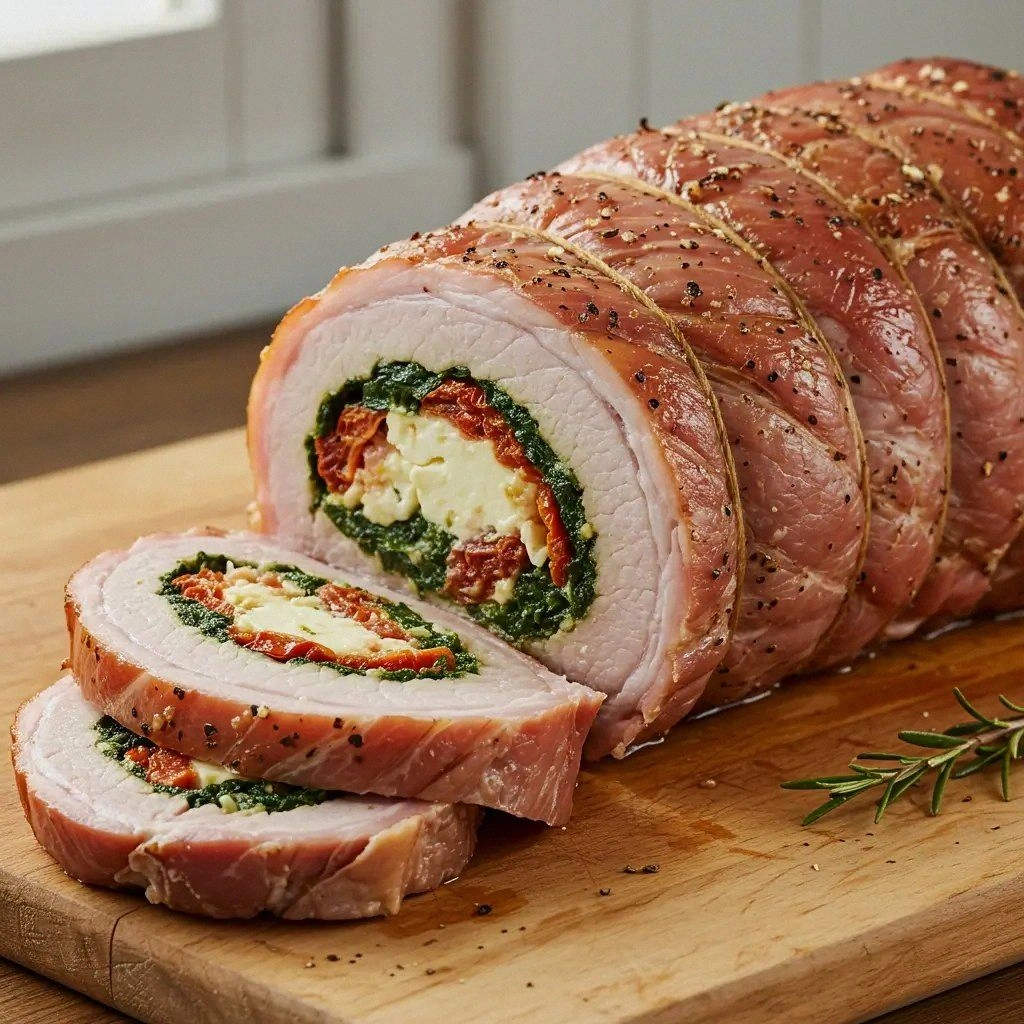
- Visual Appeal: The vibrant green of the spinach and the pale crumb of feta peek through the roast, making every slice a work of art.
- Ingredient Quality: Using fresh, high‑quality ingredients like a block of feta and organic spinach ensures that each component shines without any artificial additives.
- Ease of Prep: The stuffing is assembled in minutes, and the roast only needs a few simple seasonings before it goes into the oven.
- Make‑Ahead Potential: The stuffed roast can be prepped the night before, marinated, and then baked in the morning, saving you precious time.
- Versatility: The herb base can be swapped out for different flavor profiles – basil for a sweet note, thyme for earthiness, or even a splash of citrus zest for brightness.
- Crowd‑Pleaser: The combination of familiar flavors with a gourmet twist makes this dish a guaranteed hit at family gatherings.
Alright, let’s break down exactly what goes into this masterpiece…
Inside the Ingredient List
The Flavor Base
The foundation of this stuffed roast is the pork itself. I use a boneless pork loin that’s about 1.5 pounds in weight, which gives enough meat to create a generous roast while still allowing room for the stuffing. The pork is seasoned simply with salt and pepper, but the real magic happens when you add the herbs and a splash of olive oil. The olive oil not only helps the crust form but also carries the aromatic herbs into the meat. If you skip the olive oil, the roast will still cook, but it won’t have that glossy, savory sheen that makes the dish look as good as it tastes.
The Texture Crew
Fresh spinach is the star of the texture crew. I blanch the spinach for just a minute, then squeeze out every drop of water before mixing it with feta. The spinach’s moisture is crucial; too much liquid can make the stuffing soggy, while too little will result in a dry, crumbly filling. Feta cheese is chosen for its creamy, crumbly texture that melts into the spinach, creating a silky, savory sauce that coats the pork. The combination of spinach and feta also adds a subtle tang that balances the richness of the pork.
The Unexpected Star
Herbs and seasonings are the unexpected star that elevates this dish from ordinary to extraordinary. I blend fresh dill, parsley, and a hint of basil, then fold them into the spinach‑feta mixture. The herbs bring brightness and a subtle sweetness that cuts through the pork’s fat. If you’re a fan of citrus, a teaspoon of lemon zest gives the stuffing a zesty lift that feels like a fresh breeze on a hot day. Skipping the herbs is possible, but the dish loses its aromatic complexity and feels flat.
The Final Flourish
The final flourish is a simple breadcrumb and egg binder that keeps the stuffing together while adding a subtle crunch to the outer layer. I use 1/4 cup of breadcrumbs and one beaten egg, which help the filling adhere to the pork and give the roast a slight crispness on the top. If you’re avoiding breadcrumbs, you can substitute with crushed crackers or a small amount of almond flour. The binder also ensures that the stuffing doesn’t leak out during cooking, keeping every bite perfectly balanced.
Everything's prepped? Good. Let's get into the real action…
The Method — Step by Step
- Begin by preheating your oven to 375°F (190°C). While the oven warms, trim any excess fat from the pork loin and pat it dry with paper towels. Drying the surface ensures a better sear and a crispier crust. Once the roast feels firm to the touch, let it rest at room temperature for about 10 minutes; this helps it cook evenly.
- In a large skillet, heat 2 tablespoons of olive oil over medium‑high heat until shimmering. Add the pork loin and sear each side until a golden brown crust forms—about 3–4 minutes per side. The Maillard reaction here creates a depth of flavor that’s impossible to replicate with a slow cooker. When the roast is browned, transfer it to a plate and let it rest while you prepare the stuffing.
- While the pork rests, quickly blanch the spinach in boiling water for 30 seconds, then plunge it into ice water to stop the cooking process. This technique preserves the bright green color and locks in the nutrients. Drain the spinach thoroughly, squeezing out any excess moisture with a clean towel. The drier the spinach, the better it will hold together in the stuffing.
- In a mixing bowl, combine the blanched spinach, 1 cup of crumbled feta, 1 tablespoon each of fresh dill, parsley, and basil, and a teaspoon of lemon zest. Toss everything together until the herbs are evenly distributed. If you’re feeling adventurous, add a pinch of smoked paprika for a subtle smoky undertone. This herb mixture is the soul of the roast, giving it a fragrant, herbaceous backbone.
- Now the trickiest part: opening the pork loin. Using a sharp knife, carefully cut a pocket into the side of the roast, creating a shallow cavity that’s wide enough to hold the stuffing. Be careful not to slice all the way through; you want a secure seal. This step is where the roast’s texture is tested—if you cut too deep, the stuffing will leak; too shallow, and it won’t hold the filling.
- Fill the pocket with the spinach‑feta mixture, pressing gently to ensure it packs well but still has room to expand. Then, sprinkle 1/4 cup of breadcrumbs and a beaten egg over the stuffing. The breadcrumb‑egg binder helps the filling stay in place and adds a light crunch when the roast finishes baking. Gently close the roast, using kitchen twine to secure the edges if necessary. This ensures a tidy presentation and prevents the stuffing from escaping.
- Transfer the stuffed roast to a baking sheet or a shallow roasting pan. Roast in the preheated oven for 30 minutes, or until the internal temperature reaches 145°F (63°C). The baking time may vary slightly depending on the oven and the roast’s thickness, so use a meat thermometer for accuracy. When the roast is done, let it rest for 10 minutes; this allows the juices to redistribute, ensuring every bite is succulent.
- While the roast rests, you can quickly deglaze the pan with a splash of white wine or chicken broth, scraping up the browned bits. Reduce the liquid over medium heat until it thickens slightly, then spoon it over the sliced roast for an extra layer of flavor. The deglaze adds depth and keeps the dish from feeling dry.
- Slice the roast into 1/2‑inch thick medallions, allowing the stuffing to peek through the golden crust. Plate the slices with a drizzle of the pan sauce, and garnish with a few fresh herb sprigs. The final presentation should look like a slice of heaven—golden, green, and creamy all at once. Serve immediately, and watch the compliments roll in.
That's it — you did it. But hold on, I've got a few more tricks that'll take this to another level…
Insider Tricks for Flawless Results
The Temperature Rule Nobody Follows
Many cooks assume that 375°F is a safe bet for all roasts, but the pork loin is sensitive to temperature. The key is to start at a slightly lower heat, around 350°F, then increase to 375°F after the first 15 minutes. This gradual rise keeps the pork juicy while still allowing the crust to develop. I once tried 425°F from the start and the roast came out dry, so I’ve never looked back.
Why Your Nose Knows Best
Before you even touch the oven, sniff the pork as it sears. A warm, meaty aroma is a sign that the Maillard reaction is happening just right. If you hear a metallic smell or no scent at all, the pan is too hot or the oil isn’t hot enough. My friend once tried searing a pork roast over high heat and ended up with a charred, bitter crust. That’s why I always keep the heat at medium‑high and monitor the sizzling.
The 5‑Minute Rest That Changes Everything
After you pull the roast out of the oven, let it rest for exactly five minutes before slicing. This short rest is critical because it allows the juices to redistribute, preventing a dry center. If you slice immediately, the juices run out onto the cutting board, leaving the meat dry. I’ve tried cutting after ten minutes and still found the center slightly dry, so keep that five‑minute rule.
Use a Roasting Rack for Even Cooking
Placing the roast on a rack in the pan elevates it, allowing air to circulate around the meat. This ensures even cooking and prevents the bottom from getting soggy. If you don’t have a rack, simply line the pan with a layer of parchment paper to keep the roast slightly elevated.
Finish with a Quick Sear for Extra Flavor
Once the roast has rested, give it a quick sear in a hot pan for 30 seconds on each side. This final touch adds a caramelized flavor that’s hard to get from the oven alone. I always keep a small amount of butter in the pan for this step; the butter’s rich flavor complements the feta and spinach beautifully.
Keep the Stuffing Moist, Not Wet
The balance of moisture in the stuffing is delicate. Too much liquid, and the roast becomes soggy; too little, and the filling dries out. I recommend adding a splash of chicken broth to the spinach‑feta mixture if you notice it’s too dry after blending. The broth should be just enough to moisten, not to drown the flavors.
Creative Twists and Variations
This recipe is a playground. Here are some of my favorite ways to switch things up:
Smoky Chipotle Twist
Swap the fresh herbs for chipotle peppers in adobo sauce, and add a tablespoon of chipotle powder. The smoky heat pairs beautifully with the mild pork, creating a bold, adventurous flavor profile that’s perfect for summer barbecues.
Herb‑Infused Lemon Drizzle
Instead of the lemon zest, use a drizzle of lemon‑infused olive oil over the roast before serving. The bright citrus undertone brightens the dish and cuts through the richness, making it lighter for a spring or summer meal.
Spinach & Ricotta Stuffing
Replace feta with ricotta for a milder, creamier stuffing. Add a splash of nutmeg for warmth, and the result is a silky, comforting roast that feels like a cozy family dinner.
Roasted Tomato and Basil Variation
Layer roasted cherry tomatoes and fresh basil into the stuffing for a burst of sweet, tangy flavor. The tomatoes caramelize slightly during baking, adding a caramelized sweetness that balances the savory pork.
Asian‑Inspired Filling
Use a mixture of sautéed shiitake mushrooms, chopped scallions, and a splash of soy sauce in place of the spinach‑feta combo. The umami depth from the mushrooms and soy sauce gives the roast an Asian twist that’s surprisingly satisfying.
Breakfast‑Style Pork Roast
For a brunch twist, sprinkle a tablespoon of maple syrup over the roast before baking. The caramelized maple glaze pairs wonderfully with the savory filling, creating a sweet‑savory breakfast roast that’s perfect for weekend mornings.
Storing and Bringing It Back to Life
Fridge Storage
Cool the roast completely, then wrap it tightly in foil or plastic wrap. Store it in the refrigerator for up to 3 days. When you’re ready to reheat, let it sit at room temperature for 20 minutes to ensure even warming.
Freezer Friendly
For longer storage, wrap the roast in a double layer of freezer paper and place it in a freezer bag. It will keep for up to 2 months. Thaw overnight in the fridge before reheating.
Best Reheating Method
Reheat the roast in a preheated oven at 350°F (175°C) for about 15 minutes, or until warmed through. Add a splash of water or broth to the pan before covering it with foil; this steams the roast back to juiciness. A quick sear in a hot skillet after reheating can restore the crust’s crispness.