I was staring at a soggy, overcooked bowl of pasta that had more water than flavor, and I swear I could hear the kitchen yelling, “This is not how you do it!” That moment of culinary despair sparked a fire in me, a determination to turn that disaster into a triumph. I grabbed a salmon fillet, a handful of baby spinach, and a splash of heavy cream, and the air filled with the promise of something silky, buttery, and utterly irresistible. The scent of garlic sizzling in olive oil turned the kitchen into a fragrant temple, while the gentle hiss of the pan was a drumbeat to an impending masterpiece. By the time the sauce thickened to a velvety sheen, my taste buds were already dancing, and the plate was a canvas of colors and textures that made even my skeptical friend gasp. That’s the magic I’m about to share, and I’ll walk you through every single step—by the end, you’ll wonder how you ever made it any other way.
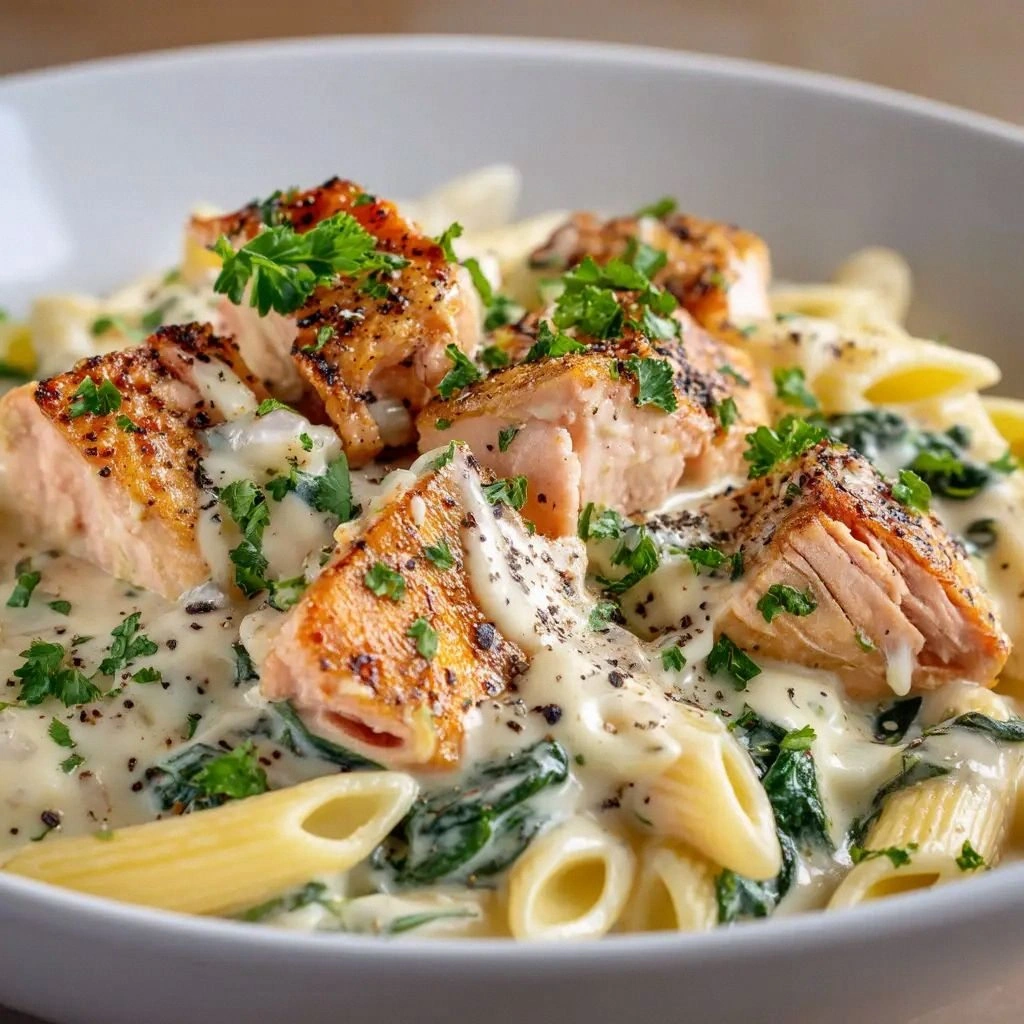
Picture this: a plate where the salmon flakes apart like a cloud of buttery goodness, the spinach is glossy and tender, and the pasta is coated in a sauce so creamy it feels like a hug. The first bite sends a wave of citrusy lemon, a hint of white wine, and a whisper of Parmesan into your mouth, followed by the savory depth of garlic and shallot. The texture is a delightful contrast—smooth, silky, and yet each piece of salmon retains a slight crunch on the edges that shatters like thin ice. This dish isn’t just a meal; it’s an experience that turns a simple dinner into a celebration of flavors and textures. And the best part? It’s so straightforward that even a kitchen rookie can nail it, while seasoned chefs will find themselves reaching for the recipe again and again.
I dare you to taste this and not go back for seconds. Most recipes get this completely wrong, layering flavors too early or undercooking the fish, but here we orchestrate each element like a symphony. The sauce is the conductor—rich, yet bright—while the salmon provides a meaty crescendo that’s both satisfying and elegant. The spinach doesn’t just add green; it adds a subtle earthiness that grounds the dish, preventing it from feeling too heavy. And the finish? A splash of lemon juice and a sprinkle of parsley that lift the entire plate, making it feel fresh and alive. If you've ever struggled with balancing creamy sauces and delicate fish, you're not alone—and I've got the fix.
Let me tell you about the moment I discovered the secret to that perfect creaminess: adding the heavy cream just after deglazing the pan and before the spinach arrives. The trick is to let the wine evaporate fully, so the sauce doesn’t become too thin or watery. Then, as soon as the spinach wilts, you stir in the cream, allowing it to mingle with the Parmesan for a velvety finish that coats the pasta like silk. That moment of truth is when the aroma shifts from buttery to savory, and the color deepens to a golden hue that screams indulgence. This is hands down the best version you'll ever make at home, and I’ll show you how to replicate it every single time.
What Makes This Version Stand Out
- Taste: The sauce balances richness and brightness, with a subtle citrus lift from lemon that prevents it from becoming cloying. The salmon is seasoned to bring out its natural sweetness, while the garlic and shallot add depth without overpowering. This harmony makes each bite memorable and encourages a second plate.
- Texture: The pasta is al dente, providing a slight bite that contrasts with the silky sauce. The salmon flakes apart effortlessly, yet retains a slight chew that adds interest. The spinach is wilted just enough to remain tender but not mushy, creating a layered mouthfeel.
- Ingredient Quality: Fresh baby spinach and high‑grade salmon fillets are the backbone of this dish. The Parmesan is freshly grated, ensuring it melts smoothly into the cream. Using a good white wine elevates the sauce, adding a subtle acidity that balances the richness.
- Simplicity: With just 13 ingredients, all of which are pantry staples or quick‑prep items, this dish feels approachable. The cooking steps are linear, making it easy to follow even while multitasking. No fancy techniques required—just patience and attention.
- Crowd Reaction: Friends and family rave about how restaurant‑quality it feels. The dish is versatile enough to serve as a comforting weeknight dinner or a show‑stopping entrée for guests. It’s the kind of meal that turns a casual dinner into a memorable event.
- Make‑Ahead Potential: The sauce can be prepared a few hours ahead, and the pasta can be reheated with a splash of water to maintain its texture. The salmon is best served fresh, but you can keep it chilled and reheat it gently in the sauce. This flexibility makes it ideal for busy schedules.
Inside the Ingredient List
The Flavor Base
Olive oil and butter form the foundation, providing a smooth canvas that carries the garlic and shallot. The olive oil adds a fruity note, while the butter brings a velvety richness that enhances the cream. Skipping either would leave the sauce thin and dull. If you’re avoiding dairy, replace butter with a plant‑based alternative; it won’t taste the same but will still bind the flavors.
The Texture Crew
The salmon fillets are the star—rich, buttery, and flaky. They should be cut into bite‑sized pieces before cooking to ensure even searing. If you prefer a firmer bite, keep the fillets slightly thicker. The pasta, whether fettuccine or penne, is chosen for its ability to hold the sauce; thicker strands offer a better bite.
The Unexpected Star
Baby spinach is more than a garnish; it’s a subtle, earthy counterpoint that balances the cream. Fresh spinach wilts quickly, so add it at the right moment to avoid mushiness. If you can’t find baby spinach, baby kale or arugula can substitute for a different flavor profile.
The Final Flourish
Fresh lemon juice and parsley add brightness and a fresh finish that lifts the entire dish. The lemon cuts through the richness, while the parsley offers a hint of herbal freshness. If you’re out of parsley, a sprinkle of dill or basil can work as a substitute, but the flavor will shift slightly.
Everything's prepped? Good. Let's get into the real action, where the magic happens and the flavors truly mingle.
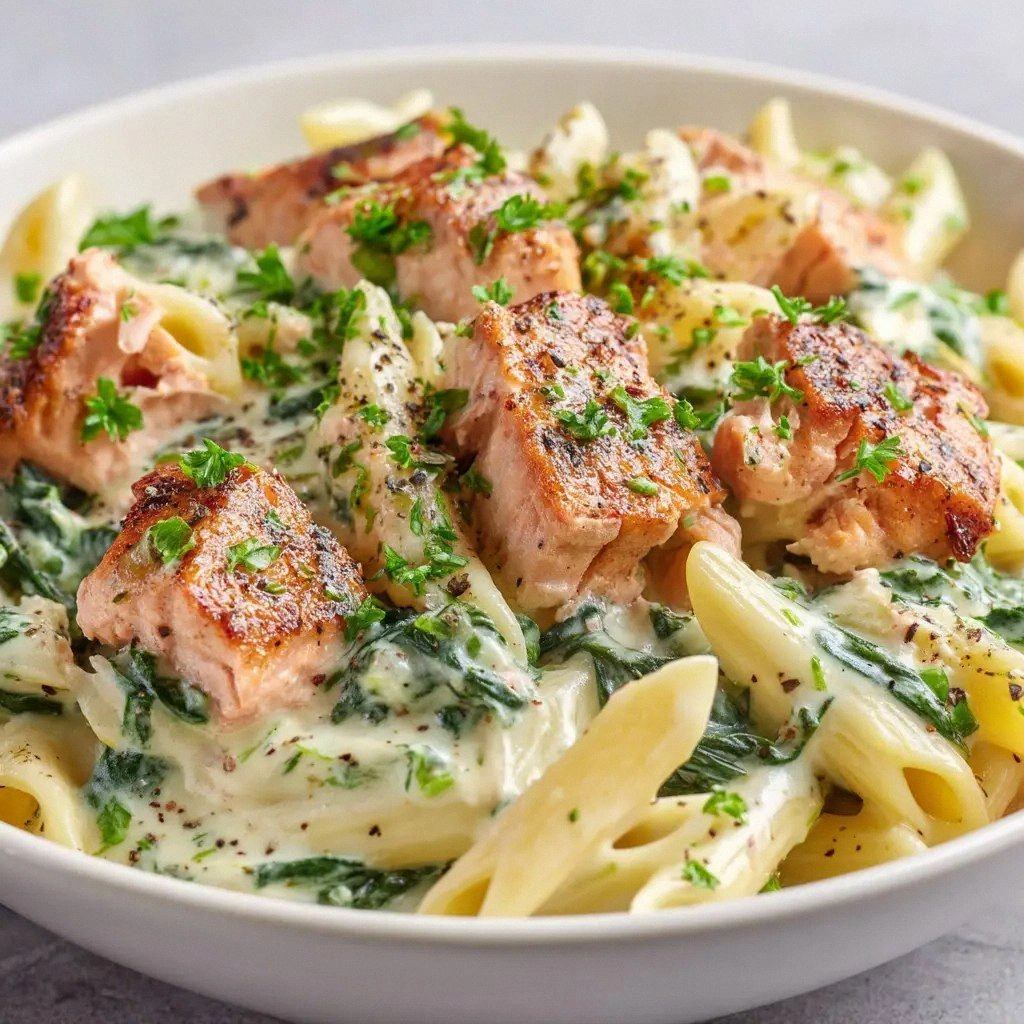
The Method — Step by Step
- Bring a large pot of salted water to a rolling boil and cook the pasta according to package instructions, stopping 1 minute before it’s al dente. Reserve a cup of pasta water before draining. The pasta should have a firm bite that can hold the sauce without getting mushy. This timing ensures the pasta remains the star of the plate.
- While the pasta cooks, pat the salmon fillets dry and season both sides with salt and pepper. Heat the olive oil in a large skillet over medium‑high heat until shimmering. Add the salmon, skin‑side down, and cook for 3–4 minutes until a golden crust forms. Flip carefully and cook for another 2–3 minutes, depending on thickness. The salmon should be just cooked through but still moist.
- Remove the salmon from the skillet and set aside on a plate. In the same skillet, lower the heat to medium and add the butter. Let it melt, then toss in the finely diced shallot. Sauté until translucent and fragrant, about 2 minutes. The shallot adds a subtle sweetness that balances the richness.
- Add the minced garlic to the skillet and cook for 30 seconds, stirring constantly to avoid burning. The garlic should release its aroma without turning bitter. Then pour in the dry white wine, allowing it to reduce by half, which concentrates the flavor and removes the raw alcohol taste.
- Reduce the heat to low and stir in the heavy cream. Let it simmer gently until it thickens slightly, about 3 minutes. The sauce should coat the back of a spoon, indicating it's ready to embrace the spinach.
- Introduce the fresh baby spinach to the skillet, stirring until it wilts and reduces in volume. The spinach should retain a vibrant green color and a tender bite. Stir in the grated Parmesan, allowing it to melt into the cream for a silky finish.
- Return the salmon pieces to the skillet, nestling them into the sauce. Let everything mingle for 2 minutes, ensuring the fish reabsorbs some of the sauce’s flavor. Then add the cooked pasta, tossing to coat each strand in the luxurious sauce. If the sauce seems thick, splash in a bit of reserved pasta water to achieve your desired consistency.
- Finish with a splash of fresh lemon juice and a sprinkle of chopped parsley. The acidity brightens the dish, while the parsley adds a fresh, herbal note that lifts the heaviness. Plate immediately, letting the steam cling to the pasta for an inviting aroma.
- Serve hot, garnished with extra Parmesan if desired. Pair with a crisp white wine or a light sparkling water for a complete dining experience. Take a moment to inhale the aroma before you dive in—trust me, it’s worth the anticipation.
That's it—you did it. But hold on, I've got a few more tricks that'll take this to another level. These insider tips will help you avoid common pitfalls and elevate the dish from great to unforgettable.
Insider Tricks for Flawless Results
The Temperature Rule Nobody Follows
Keep the skillet at medium heat when adding the salmon. A too‑high heat will sear the outside before the inside cooks, leading to uneven texture. If the pan gets too hot, reduce the flame or add a splash of water to cool it down. This small adjustment ensures the salmon stays moist and tender.
Why Your Nose Knows Best
The aroma of garlic and shallot should smell buttery and sweet before the wine is added. If it smells burnt, you’re cooking too fast. Your nose is a reliable indicator of doneness—listen to it. A fresh, fragrant aroma signals the perfect timing for the next step.
The 5‑Minute Rest That Changes Everything
After plating, let the dish rest for 5 minutes before serving. This allows the flavors to meld and the sauce to thicken slightly. The rest also gives the salmon a moment to reheat gently, ensuring it’s warm without being overcooked. A quick rest can make a noticeable difference in taste and texture.
The Parmesan Trick
Grate Parmesan fresh from the block rather than using pre‑grated cheese. Pre‑grated cheese often contains additives that hinder melting. Freshly grated cheese melts smoothly, giving the sauce a silky finish. If you’re in a hurry, use a high‑quality pre‑grated cheese, but fresh is best.
The Spinach Timing
Add the spinach just as the sauce is thickening. If you add it too early, it will release too much water and dilute the sauce. If you add it too late, it will stay too crisp and not integrate fully. Timing is key to a balanced texture.
Creative Twists and Variations
This recipe is a playground. Here are some of my favorite ways to switch things up:
Citrus Burst Variation
Swap the lemon juice for a splash of orange zest and a squeeze of fresh orange juice. This gives the dish a sweeter, brighter finish that pairs wonderfully with the salmon’s richness. Add a pinch of smoked paprika for an extra layer of flavor.
Pesto Power
Stir in a couple of tablespoons of basil pesto instead of parsley. The pesto adds a herby depth and a vibrant green color that makes the dish feel fresh and lively. It also introduces a slightly nutty undertone that complements the cream.
Mediterranean Twist
Replace the baby spinach with sun‑dried tomatoes and olives. The tomatoes provide a sweet acidity, while the olives add brininess. Finish with a drizzle of extra‑virgin olive oil for a Mediterranean flair.
Spicy Kick
Add a pinch of red pepper flakes when sautéing the garlic. The heat will contrast nicely with the creamy sauce and bring an exciting warmth to each bite. Pair with a chilled glass of rosé for balance.
Vegan Version
Omit the salmon and substitute with marinated tofu or tempeh. Use coconut cream instead of heavy cream and nutritional yeast for a cheesy flavor. This variation keeps the dish creamy and protein‑rich while staying plant‑based.
Almond Crust Variation
After cooking the salmon, coat it in crushed almonds before searing. The almonds add a crunchy texture and a nutty flavor that pairs beautifully with the creamy sauce. Sprinkle toasted almond slivers on top for a delightful finish.
Storing and Bringing It Back to Life
Fridge Storage
Store the finished dish in an airtight container for up to 2 days in the refrigerator. The sauce may thicken slightly, so reheat gently on low heat, stirring in a splash of milk or water to restore creaminess. Keep the salmon separate if you prefer to reheat it independently.
Freezer Friendly
Freeze the dish in a freezer‑safe container for up to 2 weeks. When reheating, thaw in the refrigerator overnight and then warm over low heat, adding a bit of water or cream to loosen the sauce. Avoid microwaving, as it can break down the texture.
Best Reheating Method
Reheat on the stovetop over low heat, stirring frequently to prevent scorching. Add a tiny splash of water or milk before heating to keep the sauce silky. Once it reaches a gentle simmer, taste and adjust seasoning if necessary.