You know that moment when you’re scrolling through Instagram, your stomach starts growling louder than your phone’s notification tone, and you think, “I need a Philly cheesesteak, but I’m not going out tonight?” That’s where I was a few nights ago, clutching a stack of recipe books that all promised the same bland, overcooked steak and mushy cheese. The result? A disaster that left me with a plate of limp beef, soggy veggies, and a cheese that barely remembered the word “melting.” I stared at the mess, then realized the problem wasn’t the ingredients—it was the execution. So I set out to rewrite the classic Philly cheesesteak into a bowl that’s as satisfying as the sandwich itself, but with a twist that makes it feel like a gourmet takeout you can make in under an hour.
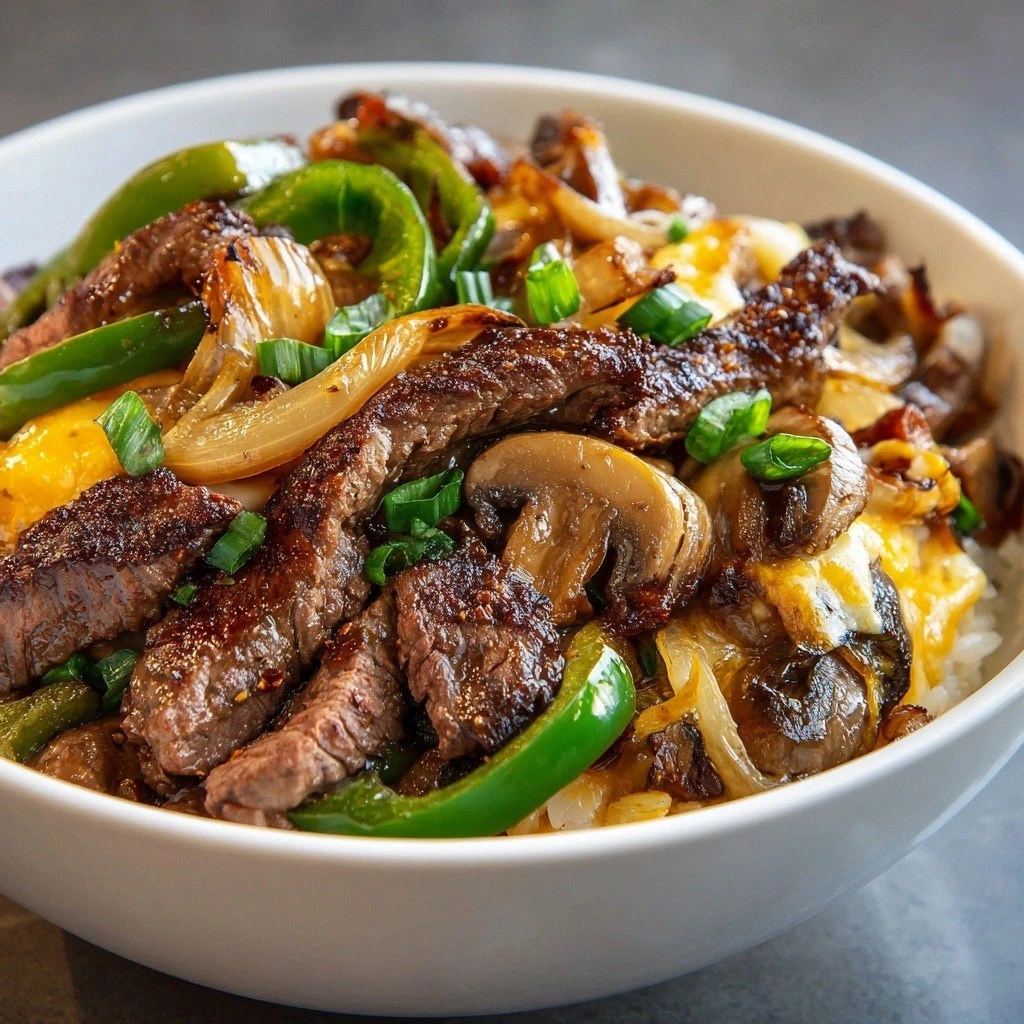
Picture this: a sizzling pan, the aroma of caramelized onions and fresh mushrooms rising like a promise, the sound of steak searing with a satisfying hiss. The colors are a vibrant palette—deep reds from the pepper, earthy browns from the mushrooms, and the creamy gold of provolone melting into a glossy blanket over the beef. You can almost feel the heat radiating off the skillet, the slight crunch of the pepper, the tender bite of the steak. And as you scoop a generous spoonful onto a bed of fluffy quinoa, the steam rises, carrying a savory bouquet that makes your mouth water before the first bite even hits your tongue.
What sets this Philly Cheesesteak Bowl apart isn’t just the combination of flavors; it’s the way each element is elevated. The steak is sliced thin and quickly seared to lock in juices, the onions are caramelized to a deep amber that balances the richness of the meat, and the mushrooms bring an earthy umami that deepens the dish. The cheese is provolone, chosen for its silky melt and subtle flavor that doesn’t overpower the other components. Every bite is a harmony of textures—crispy edges of pepper, tender steak, creamy cheese, and a hearty base of rice or quinoa that holds everything together. I dare you to taste this and not go back for seconds.
This isn’t just another bowl; it’s a reimagining of a beloved sandwich that feels fresh, hearty, and utterly satisfying. I’ve combined the classic Philly elements with a bowl format that makes it easy to serve, portion, and even bring to work. The result? A dish that’s hands down the best version you’ll ever make at home. Picture yourself pulling this out of the oven, the whole kitchen smelling incredible, and your friends or family lining up for the first spoonful. Stay with me here—this is worth it.
What Makes This Version Stand Out
- Flavor: The caramelized onions and mushrooms create a depth of flavor that mimics the iconic Philly sandwich while adding an earthy undertone.
- Texture: The steak is seared to a crisp edge, the peppers stay crunchy, and the cheese melts into a velvety coating that clings to every bite.
- Simplicity: No fancy sauces or complicated steps—just a few high-quality ingredients and a single pan.
- Versatility: Swap ribeye for chicken or turkey, or replace rice with cauliflower rice for a low-carb option.
- Portability: The bowl format makes it ideal for leftovers, meal prep, or on-the-go lunches.
- Make‑ahead Potential: The components keep well for up to 3 days in the fridge, and reheating preserves the melt of the cheese.
- Audience Appeal: Whether you’re a meat lover or a veggie enthusiast, the layers of flavor satisfy all palates.
- Presentation: The colorful veggies and golden cheese create a dish that looks as good as it tastes.
Alright, let's break down exactly what goes into this masterpiece…
Inside the Ingredient List
The Flavor Base
Ribeye steak is the star of the show, bringing a robust beefy flavor that’s unmistakably Philly. When sliced thinly and seared at high heat, the Maillard reaction creates a caramelized crust that locks in juices. If you skip the steak, the bowl loses its hearty core, becoming more of a veggie dish than a cheesesteak. For a lighter option, chicken breast or turkey can replace ribeye, but the flavor profile will shift slightly toward poultry. When selecting ribeye, look for a marbling score of 3 to 4; the fat interspersed in the muscle adds richness and prevents the meat from drying out.
The Texture Crew
Olive oil is not just a cooking medium—it’s a flavor enhancer that gives the veggies a glossy finish and prevents sticking. A splash of good olive oil also helps the steak sear evenly, creating those coveted crispy edges that shatter like thin ice. If you’re watching calories, a tablespoon of avocado oil works as a neutral alternative. The onions are sliced thinly to allow them to caramelize quickly; this process releases natural sugars that sweeten the dish. Green bell pepper adds a bright crunch, while mushrooms contribute a chewy, umami texture that balances the richness of the meat and cheese.
The Unexpected Star
Provolone cheese may seem like a simple choice, but its mild, nutty flavor and excellent meltability set it apart from cheddar or American. When heated, provolone forms a silky coating that clings to every bite, creating that gooey cheesesteak sensation. If you prefer a sharper bite, a blend of provolone and sharp cheddar works well, but be mindful of the extra salt. The cheese also helps bind the bowl together, preventing the rice or quinoa from becoming too dry. A pinch of pepper adds a subtle kick that elevates the overall flavor profile.
The Final Flourish
Cooked rice or quinoa forms the hearty base of the bowl, absorbing the juices and adding a satisfying chew. Brown rice offers a nuttier flavor and more fiber, while quinoa adds protein and a slightly nutty taste. If you’re watching carbs, cauliflower rice is a great low‑calorie alternative. The salt and pepper are essential for seasoning—don’t skip them. A final sprinkle of fresh parsley or chives can add a burst of color and freshness, but it’s optional.
Everything's prepped? Good. Let's get into the real action…
The Method — Step by Step
- Heat a large skillet over medium‑high heat. Add 2 tablespoons of olive oil, letting it shimmer. Once hot, lay the ribeye strips in a single layer. Don’t overcrowd the pan—separate batches if necessary. The goal is a quick sear, not steaming.
- Season the steak with salt and pepper. As the meat cooks, it should develop a deep brown crust on the edges, and the inside should stay pink. Flip the strips once the bottom has browned. This is the moment of truth; the sizzling sound should be audible.
- Remove the steak from the skillet and set aside on a plate. If you’re cooking for more than one person, keep the steak warm in a low oven (200°F) to prevent it from drying out.
- In the same skillet, add the sliced onions and a pinch of salt. Cook for 5 minutes, stirring occasionally, until they begin to soften. The aroma should be sweet and inviting. This step builds the foundation of flavor.
- Add the green bell pepper to the pan. Cook for another 3 minutes, letting the pepper crisp up slightly. The pepper should still hold a bite; it’s the counterpoint to the tender steak.
- Now, toss in the sliced mushrooms. Stir until they release moisture and start browning. The mushrooms should absorb the juices from the onions and peppers, creating a savory sauce.
- Return the steak to the skillet, mixing it with the vegetables. Cook for 2 minutes, allowing the steak to reheat and mingle with the veggie medley. The heat should be high enough to keep the steak sizzling, but not so hot that it burns.
- Reduce the heat to medium-low and sprinkle the provolone cheese evenly over the steak and vegetables. Cover the skillet with a lid for 2 minutes, or until the cheese has melted into a glossy blanket. The cheese should coat the meat and veggies, creating that classic cheesesteak melt.
- Serve the cheesy steak mixture over a generous scoop of cooked rice or quinoa. Garnish with a sprinkle of fresh parsley or chives if desired. The final dish should have a vibrant color palette and a rich, comforting aroma.
- Enjoy immediately, or let it cool before refrigerating for up to 3 days. When reheating, add a splash of water to keep the rice moist and the cheese creamy.
That's it — you did it. But hold on, I've got a few more tricks that'll take this to another level…
Insider Tricks for Flawless Results
The Temperature Rule Nobody Follows
Many people cook steak at a low temperature, which leads to a rubbery texture. The secret is high heat for a short time. Sear the steak over medium‑high heat until you hear a loud sizzle, then flip immediately. This locks in juices and creates a caramelized crust that feels like a buttery crunch.
Why Your Nose Knows Best
Your sense of smell is a reliable guide. When the onions are caramelizing, the scent should be sweet and buttery. If it smells raw, give it a minute longer. The aroma is a cue that the onions are developing the sugars that give the dish its signature depth.
The 5‑Minute Rest That Changes Everything
After cooking, let the steak rest for five minutes. This allows the juices to redistribute, ensuring every bite stays moist. A friend once skipped this step and ended up with a dry, unappetizing steak. The rest is a small price for a huge flavor payoff.
The Right Pan Size Matters
Use a skillet that’s at least 10 inches wide. A too‑small pan forces the steak to steam rather than sear, resulting in a mushy texture. A larger pan spreads the heat evenly and gives each piece the opportunity to develop a crisp edge.
The Cheesy Finish
If you want a cheese that melts into a silky sauce rather than forming a hard crust, use a mixture of provolone and a splash of cream cheese. The cream cheese adds creaminess, while provolone keeps the flavor profile authentic. This trick turns the bowl into a luxurious, melt‑in‑your‑mouth experience.
Creative Twists and Variations
This recipe is a playground. Here are some of my favorite ways to switch things up:
Spicy Kick
Add sliced jalapeños or a dash of hot sauce to the vegetable mix. The heat balances the richness of the cheese and beef, creating a dynamic flavor profile that’s perfect for summer barbecues.
Mediterranean Twist
Replace the green bell pepper with sun‑dried tomatoes and add a handful of kalamata olives. Finish with a drizzle of olive oil and a sprinkle of oregano for a Mediterranean flair that still honors the cheesesteak roots.
Vegan Version
Swap ribeye for grilled portobello mushrooms and use a vegan provolone alternative. Pair with quinoa for protein, and the dish becomes a hearty, plant‑based meal that satisfies even the most discerning carnivores.
Breakfast Bowl
Add a fried or poached egg on top of the cheese for a breakfast twist. The runny yolk adds a velvety texture that complements the savory steak and veggies.
Low‑Carb Edition
Replace rice or quinoa with cauliflower rice. The low‑carb base keeps the dish light while still providing a satisfying bite. Pair with a side of sautéed spinach for extra greens.
Cheese Swap
Experiment with different cheeses like fontina or Gruyère. Each brings its own melt and flavor profile, allowing you to customize the bowl to your taste preferences.
Storing and Bringing It Back to Life
Fridge Storage
Store the bowl in an airtight container for up to 3 days. Separate the rice or quinoa from the steak mixture if you plan to reheat separately; this prevents the rice from becoming mushy.
Freezer Friendly
Freeze the bowl in portions for up to 2 months. Thaw overnight in the fridge or use the defrost setting on your microwave. Reheat on the stovetop or in a microwave, adding a splash of water to keep the rice moist.
Best Reheating Method
Reheat on the stovetop over medium heat, stirring occasionally. Add a tablespoon of water or broth to create steam, which helps the cheese melt evenly and keeps the dish from drying out. Finish with a sprinkle of fresh herbs for a fresh, aromatic finish.