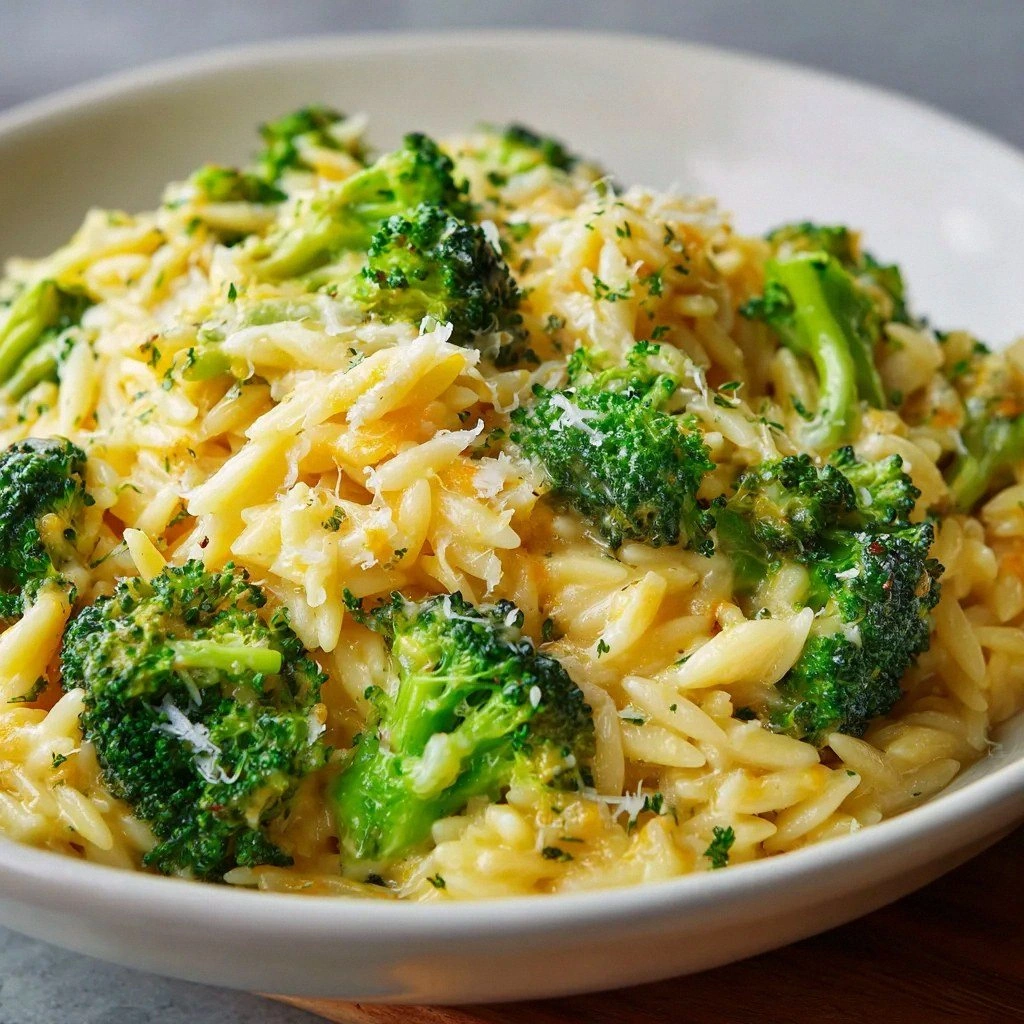
I was standing in my kitchen, staring at a bag of stale broccoli, when the idea hit me like a lightning bolt: turn that wilted green into a creamy, comforting one‑pot marvel that would have your guests asking for the recipe after the last bite. The moment the broccoli hit the pan, the aroma of toasted garlic powder danced with the buttery scent of olive oil, and I knew I was onto something special. The sound of the orzo popping in the liquid was like a tiny applause, and the sight of the sauce thickening into a silky, golden coat felt like a culinary hug. I could almost taste the melted cheddar melting into the broth, creating a velvety blanket that clung to every grain of pasta. That instant, I realized this dish was going to be a game‑changer for my dinner routine.
Picture yourself pulling this out of the pot, the steam swirling like a cloud of buttery goodness, and the kitchen filling with a scent that makes your mouth water before you even taste it. Imagine the first forkful—crisp broccoli, tender orzo, and that rich cheddar‑cream sauce that clings to the sides of your plate, leaving no grain behind. The texture is a symphony: the orzo is al dente, the broccoli has a slight bite, and the sauce is so silky it practically slides off the spoon. And the best part? It all happens in one pot, so cleanup is a breeze, and you can serve it straight from the skillet like a showstopper at any gathering. I dare you to taste this and not go back for seconds.
What sets this version apart from the countless broccoli‑cheddar recipes out there is the strategic use of heavy cream and the precise timing of the orzo addition. Instead of a dry, over‑cooked pasta, the orzo absorbs the broth and cream, creating a sauce that coats each grain like velvet. The broccoli is added early enough to steam without turning mushy, yet late enough to keep its bright color. The cheddar is folded in at the very end, ensuring it melts into the sauce without separating. The result is a dish that feels luxurious yet comforting, with a depth of flavor that makes it feel like a restaurant‑level creation made at home. Most recipes get this completely wrong. Here's what actually works.
If you've ever struggled with a one‑pot wonder that turns out dry or uneven, you're not alone—and I've got the fix. The secret lies in balancing liquid and timing, and in using ingredients that lend themselves to a rich, cohesive sauce. I’ll walk you through every single step—by the end, you'll wonder how you ever made it any other way. And trust me, the end result will have everyone asking for a second plate, because this is hands down the best version you'll ever make at home.
What Makes This Version Stand Out
- Taste: The combination of sharp cheddar and mild broccoli creates a flavor profile that is both comforting and sophisticated. The slight tang of the cheese cuts through the richness of the cream, leaving a balanced finish that lingers.
- Texture: The orzo remains al dente while the sauce thickens to a silky consistency, ensuring every bite delivers a satisfying contrast between chewy pasta and smooth sauce.
- Simplicity: All the ingredients come together in one pot, so you spend less time cooking and more time enjoying. No separate sauce or side dishes—just one pan and one pot.
- Uniqueness: The early addition of broccoli and the final splash of heavy cream give this dish a distinctive mouthfeel that sets it apart from other broccoli‑cheddar casseroles.
- Crowd Reaction: Friends and family rave about how the sauce clings to the pasta and how the broccoli stays bright green. Even cheese skeptics find themselves reaching for more.
- Ingredient Quality: Using fresh, high‑quality cheese and real vegetable broth elevates the dish, turning ordinary pantry staples into a gourmet experience.
- Cooking Method: The one‑pot technique reduces cleanup, and the gradual simmer ensures flavors meld without burning.
- Make‑Ahead Potential: This dish keeps its integrity when refrigerated or frozen, making it a perfect weeknight or weekend meal.
Alright, let's break down exactly what goes into this masterpiece...
Inside the Ingredient List
The Flavor Base
Vegetable broth is the backbone of this dish, providing a savory depth that carries the flavors of the other ingredients. It also keeps the orzo moist as it cooks, preventing it from drying out. If you’re using a low‑sodium or organic broth, you’ll notice a cleaner taste that lets the cheddar shine. Skipping broth turns the dish into a dry, over‑cooked mess; every grain of orzo will be stuck together like a single clump. A good tip: simmer the broth separately for a few minutes before adding it to the pot to bring it to a gentle boil, which helps the pasta absorb liquid more evenly.
The Texture Crew
Orzo pasta is the star that holds the sauce together. Its tiny, rice‑shaped grains soak up liquid beautifully, creating a creamy texture without becoming mushy. If you prefer a heartier bite, use a thicker pasta like penne or small shells instead. But remember, the size of the pasta affects the final mouthfeel; smaller shapes keep the sauce clingy, while larger shapes might separate. Also, rinse the orzo before cooking to remove excess starch, which can cause the sauce to become gloopy.
The Unexpected Star
Heavy cream is the secret weapon that gives the sauce its luxurious mouthfeel. It brings a silky, buttery richness that balances the sharpness of cheddar. If you’re looking to lighten the dish, half‑and‑half or even a splash of milk can substitute, though the sauce will be less velvety. Using a high‑fat cream (35% or more) ensures a stable sauce that won’t curdle when heated. Skipping cream results in a thinner sauce that can’t coat the pasta, making the dish feel underwhelming.
The Final Flourish
Shredded cheddar cheese is the crowning glory that turns a simple pasta into a comforting hug. It melts into a golden sauce that coats each grain of orzo, adding a savory depth that’s impossible to resist. You can experiment with Monterey Jack or Gouda for a different flavor profile, but the cheddar’s sharpness is what gives this dish its signature bite. A pinch of pepper adds a subtle heat that cuts through the richness, and garlic powder brings a warm, savory note that ties everything together. If you’re a garlic lover, feel free to add fresh minced garlic for a more pronounced aroma.
Everything's prepped? Good. Let's get into the real action...
The Method — Step by Step
- Heat the olive oil in a large, deep skillet over medium heat until it shimmers. Add the broccoli florets and sauté for 3–4 minutes, until they begin to soften but still maintain a bright green hue. This early sauté infuses the broccoli with a subtle toasty flavor that balances the richness of the sauce. Keep the heat steady; you want the broccoli to steam, not burn. The aroma of fresh green vegetables should fill the kitchen.
- Pour in the vegetable broth, bringing the mixture to a gentle simmer. Let it bubble for 2 minutes to allow the flavors to meld. The broth’s savory base will carry the orzo’s starch into the sauce, creating a cohesive texture. If you see the liquid reduce too quickly, lower the heat slightly. At this point, you can also add a pinch of salt to taste.
- Add the orzo to the pot, stirring to ensure each grain is submerged. Reduce the heat to low, cover, and let the pasta cook for 8–10 minutes, stirring occasionally. The orzo should absorb the liquid and become tender yet firm. Keep an eye on the pot; if the liquid evaporates before the pasta is done, add a splash of water or extra broth. The sound of the pasta cooking should be a gentle hiss, signaling a perfect simmer.
- Uncover the pot and stir in the heavy cream, then reduce the heat back to medium. Let the mixture bubble for 2–3 minutes, allowing the cream to thicken slightly. The sauce will start to coat the pasta like a silky blanket. If the sauce looks too thin, let it reduce a bit longer. The smell of cream and cheese should become irresistible.
- Fold in the shredded cheddar cheese, stirring until it melts completely into the sauce. The cheese should create a glossy, golden coating that clings to each grain. If the cheese is too thick, add a splash of milk or more cream to reach the desired consistency. The sound of the cheese melting should be a comforting, gentle clink.
- Season with garlic powder, salt, and pepper to taste. Stir well to distribute the seasoning evenly. The final flavor should be balanced, with no single ingredient overpowering the others. Taste and adjust as needed; a dash of lemon juice can brighten the dish further.
- Remove the skillet from heat and let the dish rest for 3 minutes. This allows the flavors to settle and the sauce to thicken to the perfect consistency. The rest time also lets the cheese set slightly, creating a delightful bite when you take your first forkful. The dish should look glossy and inviting.
- Serve hot, optionally garnished with extra shredded cheddar or a drizzle of olive oil for an extra touch of richness. The dish should look like a comforting, golden bowl of pasta that invites you to dig in. Pair it with a crisp green salad or garlic bread for a complete meal. The moment you taste it, you’ll understand why I’m so excited about this recipe.
That's it — you did it. But hold on, I've got a few more tricks that'll take this to another level...
Insider Tricks for Flawless Results
The Temperature Rule Nobody Follows
Keep the heat low once the broth starts to simmer. Many people crank up the heat, causing the liquid to evaporate too quickly and the orzo to overcook. I’ve learned that a gentle simmer allows the pasta to absorb liquid evenly, creating a cohesive sauce. If you notice the liquid evaporating, add a splash of water or broth to maintain the right consistency. This simple temperature tweak ensures a silky, creamy final dish.
Why Your Nose Knows Best
Before adding the cheddar, smell the sauce. If it smells like a slightly burnt or oily scent, it’s time to lower the heat. The aroma of fresh cheese melting into the sauce is a cue that the dish is on the right track. I’ve had a friend who added the cheese too early, resulting in a greasy sauce. Always trust your nose; it’s a reliable guide to the dish’s flavor profile.
The 5‑Minute Rest That Changes Everything
Letting the dish rest after cooking allows the orzo to finish absorbing the liquid and the sauce to thicken to the right consistency. A 5‑minute rest also lets the cheese set slightly, creating a delightful bite when you take a forkful. Skipping this step can leave the sauce too thin and the pasta under‑cooked. I’ve seen people serve the dish immediately, only to find it clinging to the spoon instead of the plate. Rest for a few minutes, and you’ll have a dish that glistens and feels satisfying.
Cheese Quality Matters
Using a high‑quality cheddar that’s been aged for at least 6 months gives the dish a complex flavor. Cheddar that’s too mild or too sharp can throw off the balance. I’ve experimented with different brands, and the aged cheddar consistently delivers a richer, deeper flavor that melts beautifully. If you’re on a budget, choose a block of cheddar and grate it yourself; pre‑shredded cheese often contains additives that can affect melting.
Adding a Splash of Lemon Juice
A tablespoon of fresh lemon juice added just before serving brightens the entire dish and cuts through the richness of the cream. It also prevents the cheese from separating, giving you a glossy, smooth sauce. I’ve seen people skip this step, and the sauce can become slightly cloudy. The citrus note also pairs wonderfully with the broccoli, creating a harmonious balance.
Serving Suggestions
Serve the creamy one‑pot broccoli cheddar alongside a simple green salad dressed with a light vinaigrette. The acidity of the salad cuts through the richness, creating a balanced plate. For a heartier meal, pair it with garlic bread or a crusty loaf. If you’re looking for a vegetarian option, add a handful of cooked chickpeas for protein. For a kid‑friendly twist, sprinkle some grated Parmesan on top for an extra cheesy finish.
Creative Twists and Variations
This recipe is a playground. Here are some of my favorite ways to switch things up:
Spinach & Sun‑Dried Tomato
Swap the broccoli for fresh spinach and add chopped sun‑dried tomatoes for a Mediterranean flair. The spinach wilts beautifully, and the tomatoes bring a sweet, tangy burst that complements the cheddar. This variation is perfect for spring when fresh spinach is abundant.
Mexican‑Inspired
Add a pinch of cumin and a dash of chili powder, then top with crumbled cotija cheese and chopped cilantro. The warm spices give the dish a Mexican vibe, and the cilantro adds a fresh finish. Serve with tortilla chips for an interactive appetizer.
Vegan Version
Replace the heavy cream with coconut milk and use a vegan cheddar substitute. The coconut milk adds a subtle tropical note, while the vegan cheese provides the same melty texture. This version is dairy‑free but still indulgent.
Protein Boost
Stir in cooked shredded chicken or diced ham for a protein‑packed dinner. The meat adds savory depth and makes the dish more filling. It’s an excellent way to turn the recipe into a complete protein‑rich meal.
Breakfast Twist
Serve the dish with a fried egg on top for a hearty breakfast. The runny yolk creates a sauce that complements the creamy pasta, and the protein kick makes it a satisfying morning meal. Pair it with toasted sourdough for extra crunch.
Gluten‑Free Option
Swap the orzo for quinoa or rice pasta. The grains absorb the sauce just as well, and the dish remains comforting. This version is perfect for those with gluten sensitivities.
Storing and Bringing It Back to Life
Fridge Storage
Store leftovers in an airtight container in the refrigerator for up to 3 days. The creamy sauce may thicken slightly as it chills, so reheat gently over low heat and stir in a splash of milk or cream to restore the desired consistency. The dish keeps its bright color and creamy texture when stored properly.
Freezer Friendly
Freeze the dish in a freezer‑safe container for up to 2 months. When you’re ready to enjoy, thaw overnight in the refrigerator and reheat on the stovetop, stirring occasionally. Add a small splash of water or broth to help the sauce loosen up. The texture remains smooth, and the flavors stay vibrant.
Best Reheating Method
Reheat on low heat, stirring constantly. Add a splash of water or milk to thin the sauce if needed. Avoid boiling, as high heat can cause the cheese to separate. When the dish reaches a gentle simmer, it’s ready to serve. The aroma will be just as inviting as when it was first cooked.